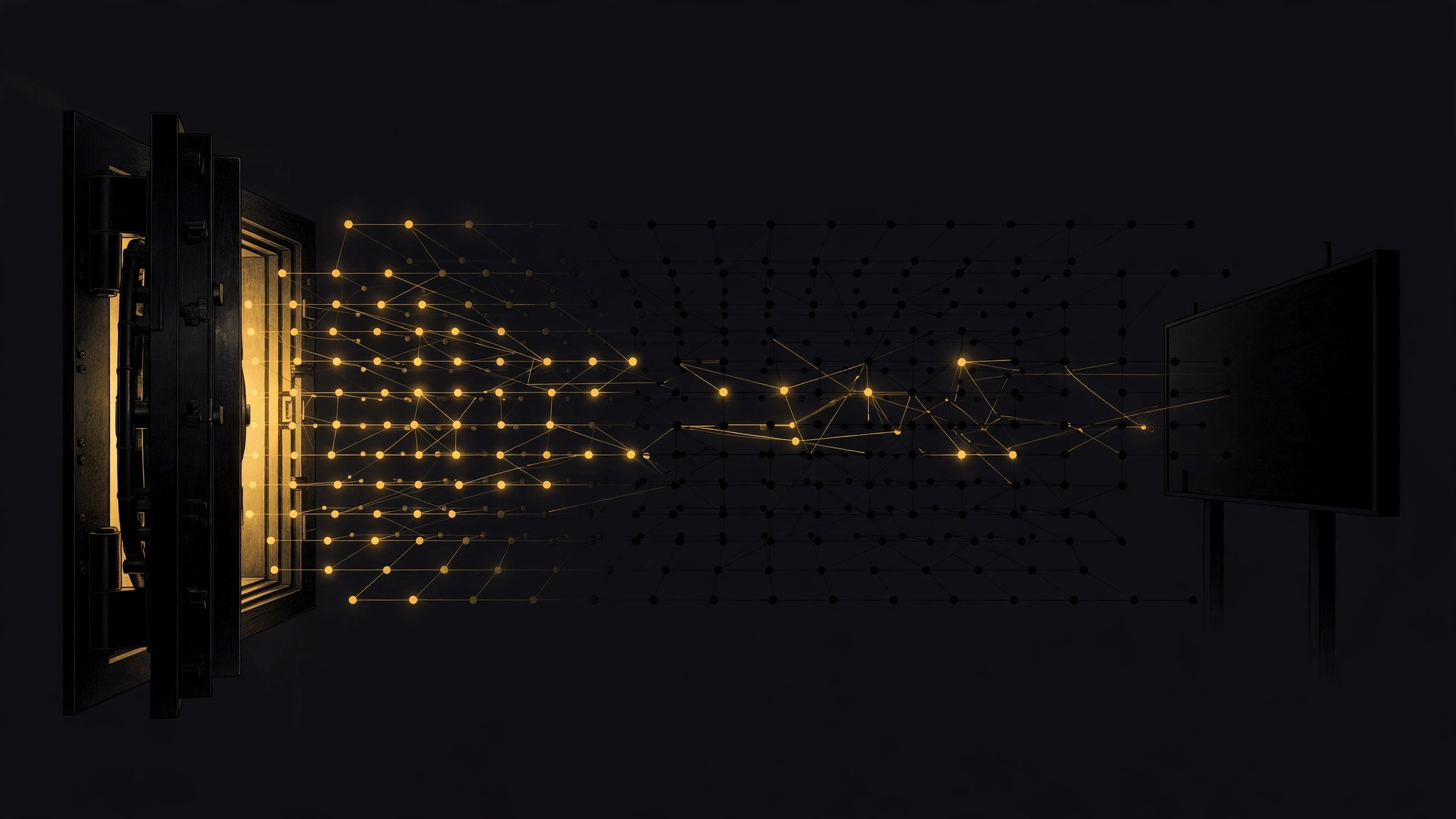
A flagship release with the score page left blank
Most large open releases arrive with a table. Xing4.1-Preview arrives with a paragraph explaining why there is no table: full benchmark results will be published with the technical report at the official release, no scores are quoted before they are confirmed through official channels, and any third-party numbers circulating before then should be treated with caution.
That is an unusual choice, and it cuts both ways. It denies the release the headline comparison every other launch reaches for. It also denies everyone else the usual argument about whether the vendor picked favorable tests, because there is nothing to argue with yet. What can be checked today is narrower than a score: the weights exist, the architecture is set out on the card, and the license is a standard one.
The license is the part to read first
The card lists the license as Apache 2.0, full stop. Readers who followed Tencent's Hy4 release earlier this month will notice the difference. Hy4's 770B weights shipped under the Tencent Hy License, derived from Apache but with a Section 10 that requires a separate written license for model-as-a-service operators above US$50 million in aggregate worldwide gross revenue in any 12-month period, or 100 million monthly active users in any calendar month. Xing4.1-Preview carries no such threshold on its card. A 285B model is not a consumer download in any practical sense, but the legal terms for the organizations that can run it are simpler here than on the larger Chinese flagship released days earlier.
What 285B open actually costs to run
The arithmetic is on the card. The BF16 weights are approximately 521 GiB. The serving example estimates that the weights alone need roughly eight 80 GB GPUs at tensor-parallel size 8, and that longer contexts need proportionally more memory, on a model whose native context is one million tokens. That estimate covers holding the weights; it is not a promise that any eight-GPU node serves the full context or fine-tunes the model. The FP8 and NVFP4 builds reduce the file size; Local Model Watch puts the NVFP4 build at about 158 GB.
So "open" here means something specific: an organization with serious hardware can inspect, fine-tune and serve the model under a permissive license, and the card lists support in the places that matter for that audience — llama.cpp for GGUF builds, SGLang and an official vLLM plugin for serving, ms-swift and LLaMA-Factory for fine-tuning, with TensorRT-LLM and KTransformers still under upstream review. Outside measurements, when they come, will require the same class of hardware, and the card has already told readers to discount anything published before its own report.
The Ascend point, stated once
The card says the model was trained end-to-end on a fully in-house domestic compute stack. The November 17 technical report on the Xing 4 family fills in the specifics it reports: pretraining of the 285B model on 8,192 Huawei Ascend 910C cards, using MindSpore HyperParallel, with no Nvidia hardware in the stack. What changed over November 22–23 is that the flagship weights the family paper describes, not only the smaller 29B member published earlier, are now public. A training run at this scale on a non-Nvidia stack is an engineering fact independent of how well the model scores, and it is the part of this release that does not depend on the missing table.
What to watch
Three things will settle what this release is worth. First, the technical report with this model's benchmark results, which the card promises at the official release — the gap between a preview with no scores and a release with them is where the claim will be tested. Second, an independent serving or evaluation run from a lab with the hardware to hold the BF16 or FP8 weights. Third, whether the FP8 and NVFP4 builds get the community quantization treatment that made smaller Xing 4 members runnable on single machines. Until the first of those lands, the accurate description of Xing4.1-Preview is the one its own card gives: a very large, permissively licensed model whose measured capability its maker has not yet published.
Sources
- [1] XingChen-AGI, "Xing4.1-Preview" model card, Hugging FaceRead source
- [2] XingChen-AGI organization page, Hugging FaceRead source
- [3] Xingchen AGI Lab et al., "TeleChat to Xing4: Advancing Frontier Agentic Models on Domestic Chips and Frameworks," arXiv 2611.22115, November 17, 2026Read source
- [4] Local Model Watch, "Xing4.1-Preview-NVFP4 Released," November 23, 2026Read source