One company, two opposite quarters
Read as two businesses, the quarter is not ambiguous. The semiconductor division sold 147.1 trillion won of product, up 15% from the second quarter, and kept 106.5 trillion won of it as operating profit. It is the first time the division has cleared 100 trillion won in a quarter, and Samsung described the group figure as the first time a technology company has passed 100 trillion won of quarterly operating profit, a claim that is the company's own.
Device eXperience revenue rose 8% sequentially to 52.1 trillion won, but the division reported another 800 billion won operating loss. Samsung identified higher component costs, including more expensive memory used in finished products, as a source of pressure. The available figures do not quantify how much of the loss came from memory rather than other costs or product mix. BigGo's breakdown of the results puts 600 billion won of the loss in mobile and networks and 200 billion won in televisions and appliances, and notes the loss was smaller than a market forecast of more than 1 trillion won.
A conglomerate is supposed to smooth exactly this. When one business is at the top of its cycle, another carries the group through the bottom of a different one. Samsung's structure currently does something else. Samsung's businesses have different exposures to the same memory-price cycle. Higher market prices can improve the semiconductor division's earnings while raising component costs for phones and other finished products. That creates opposing pressures within the group, although intercompany transactions and consolidation adjustments mean the divisional figures cannot be treated as two independent profits or losses generated by the same internal sale.
Sold out for next year
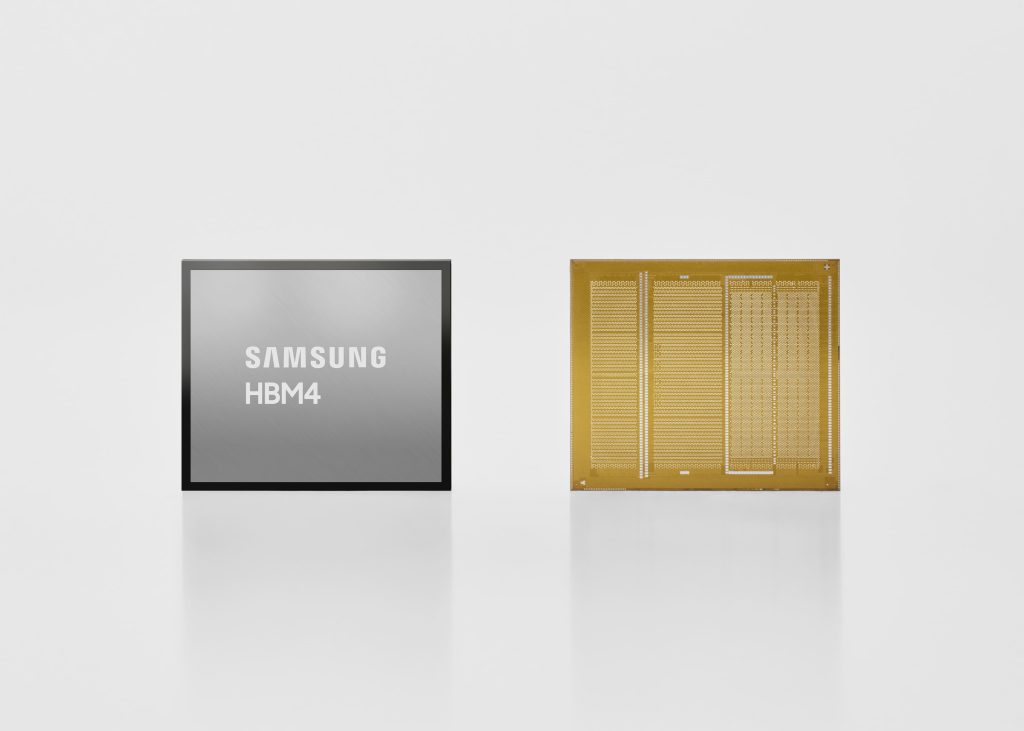
The forward claims made on the October 29 earnings call are the part of this release that outlasts the quarter. Samsung said HBM4 revenue tripled from the second quarter and made up 60% of its HBM revenue in the third, and that its aim of holding an HBM market share in line with its overall DRAM share in the second half was reached a quarter early. On the earnings call, Samsung said its planned HBM supply for 2027 had been committed at its targeted pricing levels and described the available capacity as sold out. That is management's characterization of forward demand; the supplied reporting does not establish the precise contractual terms or guarantee that all planned shipments will become recognized revenue. Samsung also said customers were still asking for more than the committed supply.
Beyond HBM, the company said it has signed long-term supply agreements with 10 major customers and is negotiating with 10 more, some of them at a final stage. It put a target on the programme: contracts covering 60 to 70% of production capacity by 2030, with the customer list widening from hyperscalers, server makers and chip designers to mobile, automotive and networking buyers. Samsung, like SK hynix a day earlier, expects the chip supply shortage to deepen into next year rather than ease.
These agreements matter more than the quarter does. A memory maker's historic problem is that its best quarters are priced by a spot market that reverses without notice. Longer-term agreements could improve visibility into future production volumes and customer demand. How much they protect Samsung from a future downturn depends on contract duration, pricing mechanisms, purchase commitments and other terms that have not been disclosed in the supplied reporting. Contracted capacity should not be treated as automatically insulated from the memory-price cycle. The company is spending accordingly, with 84.4 trillion won of facilities investment planned for this year, 76.8 trillion of it in the semiconductor division, and it is returning cash at a scale that assumes the cycle has some duration: Samsung announced a third-quarter cash dividend totaling 30 trillion won and estimated full-year 2026 shareholder returns of 90–110 trillion won. With 35 trillion won already completed or planned, 55–75 trillion won remains. The board expects to finalize the remaining allocation and the next shareholder-return policy in late January 2027.
The market, on the morning itself, was not persuaded to pay more for any of it. Samsung's shares were down 5.17% at 229,500 won as of 10:40 a.m. KST on October 29. A fall on a record print is not a verdict on the quarter. It is a reminder of what the price already contained before the divisional breakdown arrived, and of how much of this record depends on a price Samsung does not set.
Sources
- [1] Samsung Electronics, “Samsung Electronics Announces Third Quarter 2026 Results” (Samsung Global Newsroom, October 29, 2026) — consolidated revenue and operating profit; DS revenue of 147.1 trillion won and operating profit of 106.5 trillion won; DX revenue up 8% with an operating loss of 0.8 trillion won; MX/Networks operating loss of 0.6 trillion won and VD/DA loss of 0.2 trillion won; Samsung Display operating profit of 1.1 trillion won; the dividend of 4,601 won per share totaling 30 trillion won; full-year 2026 returns of 90–110 trillion won with 35 trillion won already planned or completed and 55–75 trillion won remaining, to be finalized at the board meeting in late January 2027; full-year capital expenditure of about 84.4 trillion wonRead source
- [2] Reuters via SRN News, “Samsung posts record profit in Q3 on AI chip boom” (published October 29, 2026, 00:59 UTC; updated 02:05 UTC) — group operating profit of 107.4 trillion won ($80.04 billion at $1 = 1,341.75 won), up from 12.2 trillion won a year earlier; the shortage-deepening outlook shared with SK hynix; the 30 trillion won dividendRead source
- [3] Seoul Economic Daily, “Samsung Posts Record 107 Trillion Won Profit on Chip Boom” (October 29, 2026) — revenue of 195.25 trillion won and operating profit of 107.44 trillion won, margin of 55.0%; DS revenue 147.1 trillion won and operating profit 106.5 trillion won; memory revenue 140.7 trillion won, up 427%; DX revenue 52.1 trillion won and its 800 billion won loss; dividend of 4,601 won per share totalling 30 trillion won, record date September 30 and payment November 27; returns of 90–110 trillion won; facilities investment of 84.4 trillion wonRead source
- [4] Seoul Economic Daily, “Samsung Chip Division Posts First-Ever Quarterly Operating Profit Above 100 Trillion Won” (October 29, 2026) — final revenue 300 billion won above the October 8 preliminary, operating profit matching it; DX loss of 800 billion won unchanged from the second quarterRead source
- [5] Aju Business Daily, “Samsung Electronics Reports Record Q3 Operating Profit of 107 Trillion Won” (October 29, 2026) — year-over-year and quarter-over-quarter growth rates; DS margin of about 72.4%; Samsung Display operating profit of 1.1 trillion won and Harman 600 billion won. (Its DX-loss figure is not used; the official release and three other sources give 800 billion won.)Read source
- [6] Aju Business Daily, “Samsung's chip division Q3 profit near $80B” (October 29, 2026) — DS profit up about 20% on the prior quarter; supply constraints persisting through 2027; shares down 5.17% at 229,500 won as of 10:40 a.m. KST on October 29Read source
- [7] MoneyToday, “Samsung Electronics signs long-term deals with 10 major clients as demand exceeds expectations” (earnings call, October 29, 2026) — 10 LTAs signed, 10 more in negotiation, the 60–70% of capacity target by 2030, and the widening customer scopeRead source
- [8] MoneyToday, “Samsung Electronics: HBM4 revenue up 3x from previous quarter… Next year's HBM supply fully sold out” (earnings call, October 29, 2026) — HBM4 revenue tripled quarter over quarter, 60% of HBM revenue, HBM share goal reached in Q3, next year's supply sold out at target prices, with major customers still requesting additional volumesRead source
- [9] MoneyToday, “Samsung Electronics' chip profits hit 106.5 trillion won, defying K-chip peak fears” (October 29, 2026) — foundry and system LSI still loss-making and the estimated memory-only margin of about 77%; HBM4 supply for Nvidia's Vera Rubin platformRead source
- [10] BigGo Finance, filing and earnings-call coverage (October 29, 2026) — DS at 99.2% of group operating profit; the DX loss split of 600 billion won in mobile and 200 billion won in televisions and appliances, and the forecast it beat; Q3 net profit of 75.21 trillion won; the roughly 10 trillion won currency effect on operating profit stated on the callRead source
- [11] Samsung Semiconductor Global Newsroom, “Samsung Ships Industry-First Commercial HBM4 With Ultimate Performance for AI Computing” (February 12, 2026) — source of the mid-article official HBM4 product image, self-hosted as samsung-hbm4-official.jpgRead source