A blog launch whose first post is a physics claim
OpenAI's science blog, announced on November 15, carries the expected mission statement: a place for scientists and academic researchers to share what they are discovering with AI and how they are doing the work, across three kinds of posts, results, methods and firsthand accounts. The launch post backs that framing with a run of recent company claims, from a September internal-system proof addressing the Navier-Stokes existence and smoothness problem to a biology result in which thousands of GPT-Rosalind agents analyzed data from millions of mouse brain cells in 32 minutes. Those are OpenAI's descriptions of OpenAI's results, and they are the backdrop, not the news.
The news is the company the launch post keeps. The blog's first guest post is not about a product. It is a long, careful explainer by physicist Nathaniel Craig, a visiting scientist at OpenAI, about one of the oldest unfinished jobs in theoretical physics: giving the Standard Model a nonperturbative definition.
What has been missing for fifty years
The Standard Model predicts particle interactions with extraordinary precision, but the standard way of calculating with it treats interactions as small corrections to a solvable problem. That method, perturbation theory, cannot by itself answer questions where the interactions are the whole story, the mass of the proton being the textbook case. The alternative is to put spacetime on a grid, a lattice, and calculate directly. Lattice methods have worked well for the strong force. They have resisted the full Standard Model for a specific reason: the weak force treats left-handed and right-handed particles differently, and the most natural lattice rules for a left-handed particle quietly supply a right-handed partner nobody asked for.
Workarounds for that doubling problem have existed for decades. What stayed missing, in Craig's account, for more than 25 years was the phase prescription for the full theory: the rule that keeps the mathematical measure consistent as the force fields change. Craig's October preprint, written with Astra's aid and submitted to arXiv on October 6 with Craig as sole author, proposes that rule, on admissible gauge fields. Its abstract describes a construction on four-dimensional Euclidean lattices for a class of chiral gauge theories that includes the Standard Model, and it uses the word that matters most in this story: candidate.
What Astra is said to have done
Craig is specific about the division of labor, and the specificity is why this post is worth reading rather than summarizing from a headline. He had the strategy: represent the force fields on a succession of finer grids, compare the allowed fermion states between neighboring grids, and add up the differences to recover the phase rule on the original grid. What he had not done was prove the strategy worked in every case it needed to cover.
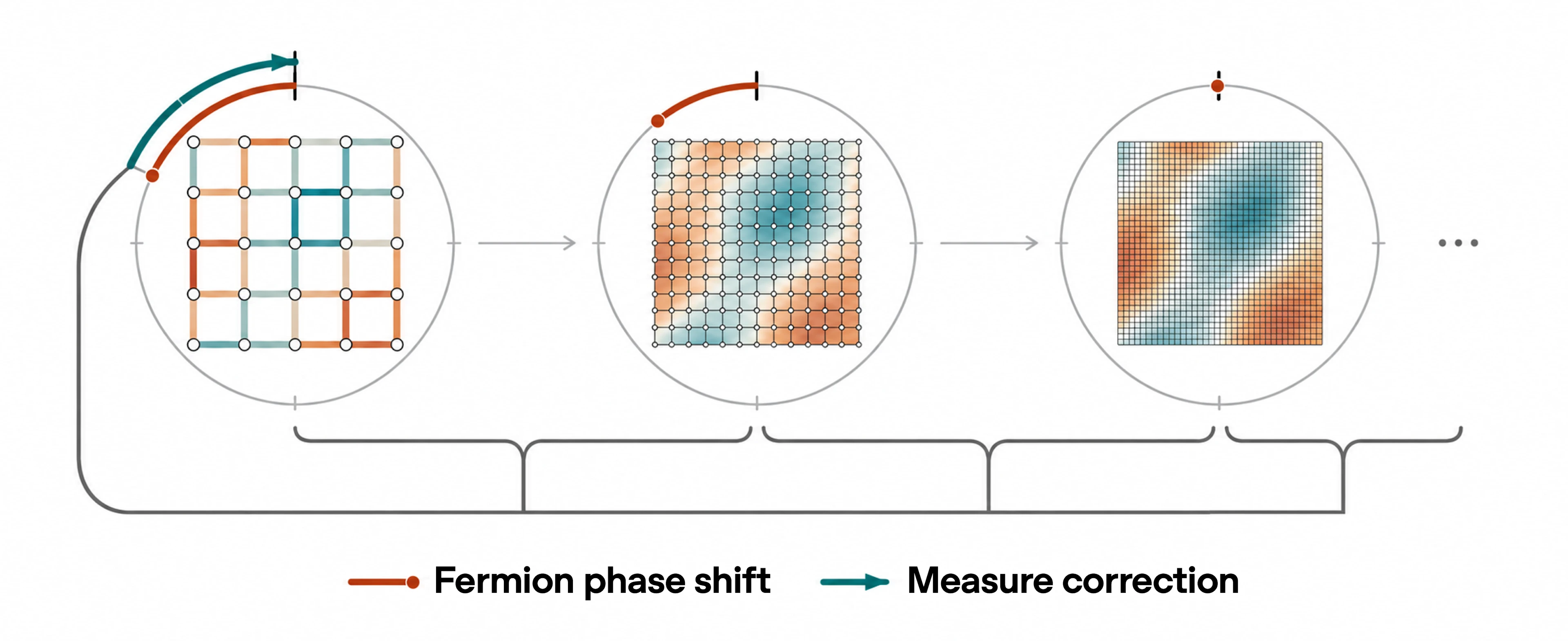
In his account, GPT-6 Astra suggested the right way to carry a set of force fields onto finer grids, showed that the comparisons on those grids converge to a definite answer, and "took the lead in developing the detailed proof." Three established lattice theorists, Maarten Golterman, Andreas Kronfeld and Yigal Shamir, then looked over the proof and asked probing questions that helped him build confidence in it. The arXiv listing adds ancillary files, including a Lean formalization with a verification report; this desk has not read them or assessed their scope. The sources reviewed for this piece contain no independent assessment of any of it, and neither OpenAI post claims peer review.
The caveats are in the text, in the author's own words
To Craig's credit, the guest post does not oversell its own result, and any honest account has to carry its qualifications at the same size as its claim. He calls the construction "much more a beginning than an end." He says expert dialogue is still required to decide whether the prescription has all the properties physicists want. He describes the method as "far more an answer in principle than an answer in practice," with much work ahead before it is useful for realistic lattice simulations. And he names the specific property he is still thinking about: reflection positivity at finite lattice spacing, the condition Craig describes as connecting the lattice calculation to a quantum theory in which probabilities are conserved. A candidate definition that may not yet satisfy that condition is a proposal under examination, not a settled definition.
There is also a structural caveat no reader should skip. The strongest sentence in the story, that a model "took the lead" on a proof in a fifty-year-old problem, appears in a guest post on the model's maker's own new blog, written by a visiting scientist at that company, launching a publication whose stated purpose includes showing what its models can do in science. None of that makes the claim false. Craig's preprint is public, his name and reputation are on it alone, and the construction will stand or fall in front of lattice theorists who have worked on this problem for decades. It does mean the credit claim arrives through exactly one channel, and the channel has an interest in it.
How to read the next few months
The evidence that would clarify this is ordinary and visible. The preprint can be read, including its supplementary files. Lattice specialists can test whether the construction has the required properties, starting with the reflection positivity question Craig himself raised. And the continuum question, whether the lattice definition connects to the interacting theory in continuous spacetime, remains open by his own account. Craig points to OpenAI's recent Yang-Mills existence proof, which he says supplies the missing piece by taking the continuum limit from lattice overlap fermions; that is another company claim awaiting the same community process.
Until those checks land, the accurate headline is the awkward one: a respected physicist says a model led the proof of a candidate answer to a fifty-year problem, and says in the same breath that it is a beginning. Both halves are the story.
Sources
- [1] OpenAI, "Our new blog for science," November 15, 2026Read source
- [2] OpenAI, Nathaniel Craig, "A step toward defining the Standard Model on a lattice," November 15, 2026Read source
- [3] Nathaniel Craig, "A gauge-invariant measure for lattice chiral fermions," arXiv:2610.09093, submitted October 6, 2026Read source
- [4] Daily AI Brief, "OpenAI says GPT-6 Astra led the proof behind a candidate lattice definition of the Standard Model," November 15, 2026Read source