What was actually done
Loading classical data into a quantum processor is one of the unglamorous bottlenecks in quantum machine learning. Before a chip can compute on an image or a dataset, the numbers have to get in, and every encoding step adds noise. Earlier methods of this kind also tended to assume each data qubit is wired directly to every qubit that addresses it. IBM's superconducting chips do not work that way; each qubit connects only to its nearest neighbors.
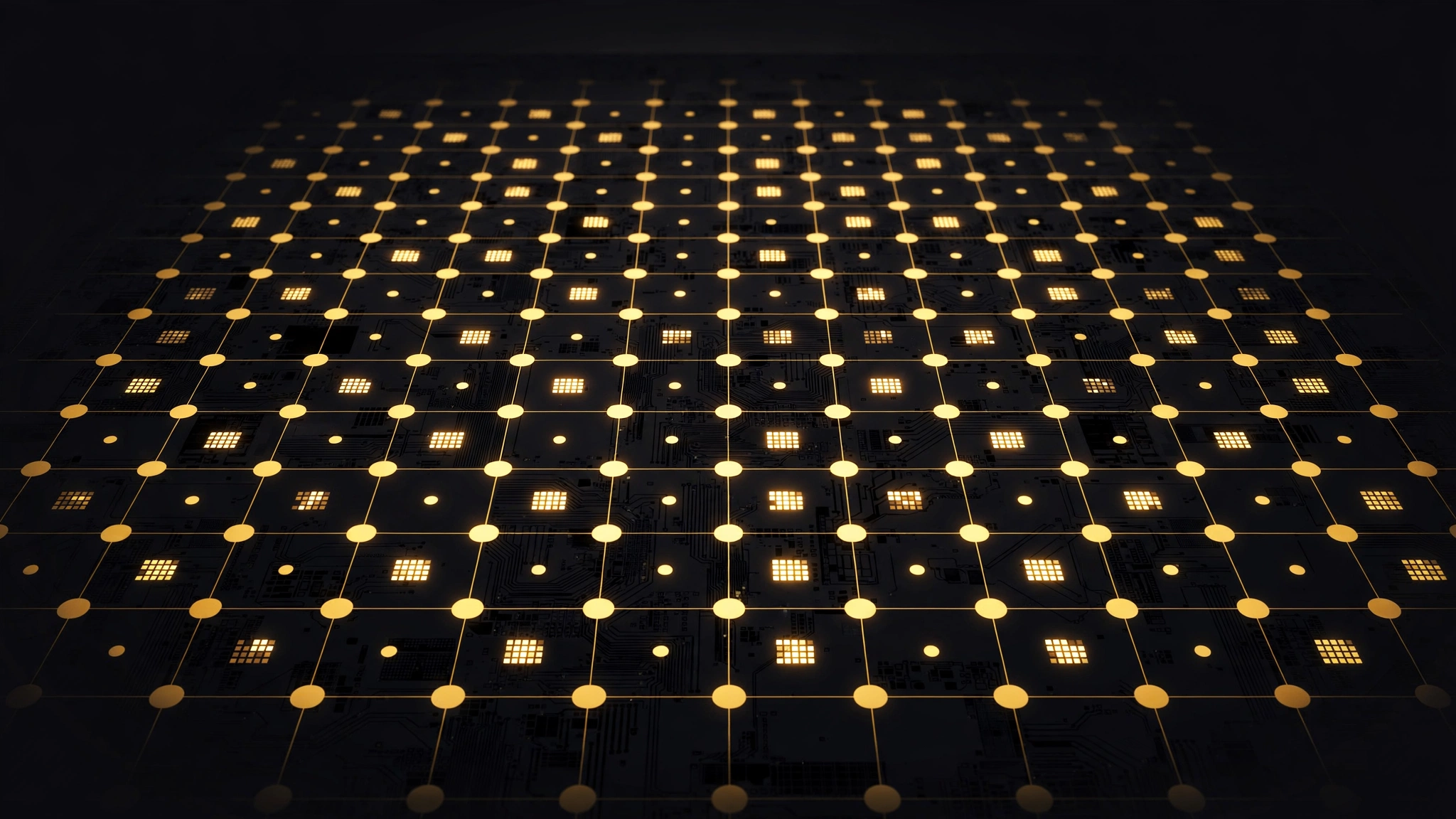
Tessa is built around that constraint instead of against it. The chip is colored like a checkerboard. Data qubits hold the information; their neighbors act as address qubits that tell each data qubit where its values belong. Neighboring data qubits share address qubits, and the paper shows the values on each data qubit can still be read out independently. Because every data qubit is written at the same time, the circuit depth does not grow with the chip: 784 values took a two-qubit gate depth of 19 on the Nighthawk r2, and Moth says the same depth holds at 400 qubits.
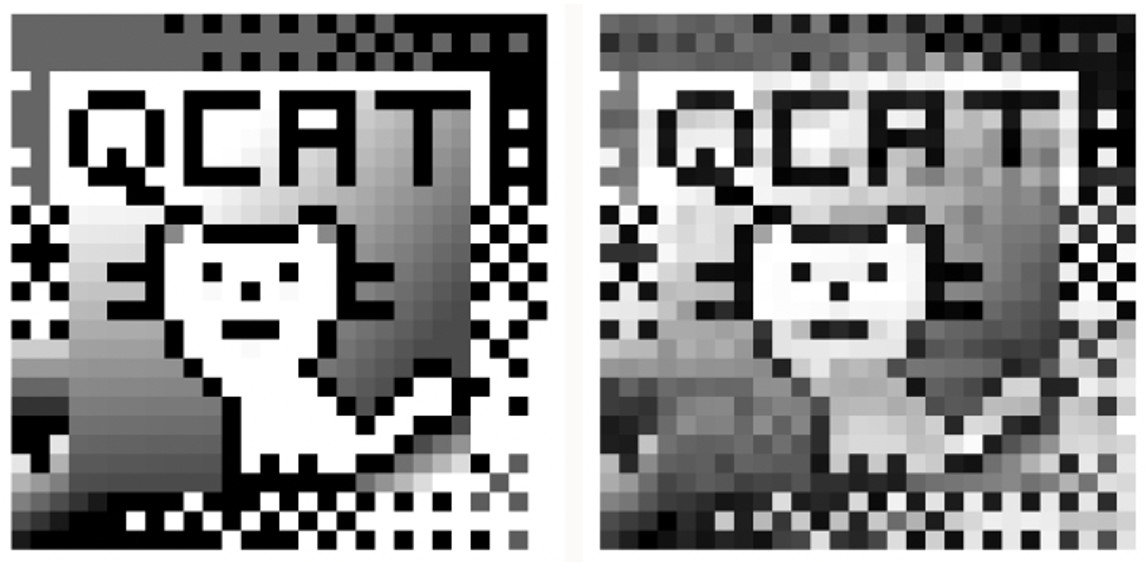
The demonstrations are deliberately varied. A pixel-art cat (QCAT) was stored and read back on five IBM machines. Audio, musical scores, DNA and protein sequences were also run, including a 784-letter stretch of mitochondrial DNA that came back with about 92% of its letters exactly right. Moth is clear in its own post that reading data back is a test that it arrived intact; in a real application the data would be processed on the chip instead.
The record, read carefully
"More than twelve times as many values as any previous experiment of its kind" is the sentence that will travel. The arithmetic is fine: 1,568 against 128 is a factor of 12.25 (ALFW arithmetic). The qualifier doing the work is "of its kind."
The paper defines the category narrowly, as Unite.AI's summary of it spells out: experiments that loaded freely chosen numeric lists onto physical quantum processors and retrieved the individual values, excluding runs that returned only a derived quantity. Inside that definition, Tessa's run is the largest reported. Outside it, the comparison set changes, and the record claim changes with it. That does not make the claim false. It makes it a claim about a category Moth's own paper drew.
The second thing the headline leaves out is accuracy. The single-basis runs report correlations of 0.95 to 0.96 between what went in and what came back, on raw hardware with no error mitigation. The 1,568 figure, though, comes from the pair run, which adds a second encoded value in the phase, and that run is measurably worse: a value correlation of 0.69 and a mean absolute error of 0.152, per the paper via Unite.AI. The record count and the clean readback are not the same experiment. A reader who takes "1,568 values recovered" to mean "1,568 values recovered at the accuracy shown in the cat pictures" has merged two different runs.
The DNA result deserves the same slow read. 92.1% of nucleotides exactly correct sounds high until the unit is a sequence, where the paper itself cautions that even one wrong nucleotide can matter. And the slightly better 92.3% figure uses a reference-informed recovery setting, chosen with the true sequence, so it should not be presented as blind recovery accuracy.
What this does and does not change
Tessa does not remove the data-loading cost that critics raise against quantum machine learning claims. Moth says so itself: it reduces that cost on today's hardware. The honest trade is stated in its own post. More values per qubit means more measurement shots to read them back at a given accuracy, so part of the saving is paid at readout.
What is solid here is the engineering direction. A loading method that uses every qubit on a sparsely wired chip, with no SWAP gates in the construction and a constant circuit depth as chips scale, is worth independent evaluation regardless of where the record line is drawn. Unite.AI reports that the repository supplies raw hardware counts, job records and notebooks that regenerate the paper's figures; ALFW has not tested that workflow, and the sources reviewed provide no independent reproduction of the results.
Read the announcement as a step in one specific part of the pipeline, reported with its own caveats attached, and it holds up. Read it as a general breakthrough in quantum data handling, and you have read more than Moth's paper claims.
Sources
- [1] Moth, "Tessa: loading a record amount of data onto real quantum chips," November 16, 2026Read source
- [2] Moth press release via PR Newswire, "A Breakthrough That Really Counts," November 16, 2026Read source
- [3] Unite.AI, "Moth's Tessa Encodes and Recovers 1,568 Values on a 120-Qubit Chip," November 16, 2026 (paper accuracy figures, the record definition and run-log dates as reported there)Read source
- [4] Daniel Bultrini, "Encoding Classical Data Across an Entire Quantum Processor," arXiv paper linked from Moth's post (ALFW read Moth's post in full and the paper's figures via Unite.AI's summary, and has not reproduced the experiments)