A fifth day, and a steeper one
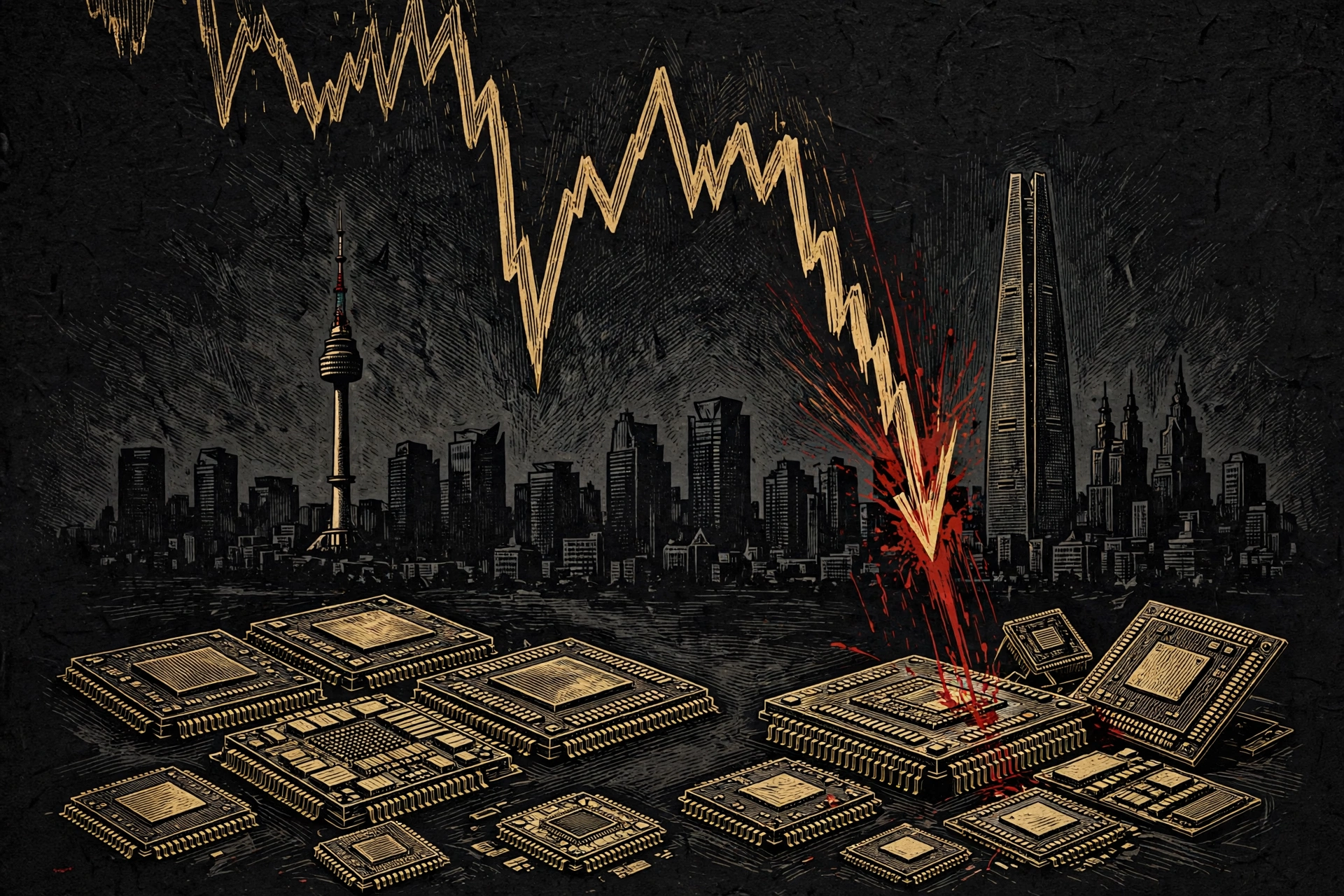
The selling in Korean chip stocks is not new this week. Tuesday made it worse. The KOSPI fell more than 6% during the 13 October session, at one point below 6,000, extending the slide in Samsung Electronics and SK Hynix to a fifth straight day. Reuters put Samsung down 10% and SK Hynix down 8% on the day; in Tokyo, Kioxia fell 13%, the heaviest of the AI-linked losses there. The latest leg of the selloff followed Monday's 2.7% decline in the US Philadelphia Semiconductor Index.
Reuters described the session as the strongest sign so far that sentiment around the AI trade is shifting, and noted the falls were the heaviest since a similar collapse at the end of July. The KOSPI is on its longest losing streak in more than two years and is down about a quarter from its July highs. Shanghai's STAR Market has lost more than a third from its July peaks.
Those are index moves, not a demand report. No chipmaker cut guidance on Tuesday. No hyperscaler cancelled a data centre. What changed was the price investors were willing to pay for the same expected future — and two specific things changed it.
Trigger one: a Chinese memory claim
The Korea-specific trigger was ChangXin Memory Technologies. CXMT has reported progress on a 4F² DRAM cell architecture — a denser cell design — and says it plans to launch DDR5 server memory using it by the end of 2026. Bloomberg's account, carried in market coverage of the session, tied the Korean falls directly to renewed concern about Chinese competition, and noted that Samsung had posted record earnings the previous week without lifting its stock.
Read that trigger at its actual size. A cell-architecture progress claim is not a product. There is no shipped CXMT server part, no independent yield data and no customer list in any of the reporting. What the claim attacks is an assumption, not a shipment: the idea that advanced memory supply stays concentrated in two Korean companies long enough to defend premium margins. Markets do not need the competing product to exist before they reprice that assumption. They only need to believe it might.
Trigger two: the buildout just got more expensive to fund
The second trigger is financing. Bond yields have risen and, as one Sydney portfolio strategist quoted by Reuters put it in paraphrase, bond volatility itself is now feeding into asset pricing across the board. On Monday, BlackRock's research arm downgraded its US stocks outlook to neutral, pointing to potential volatility around the AI buildout, and turned positive on short-term Treasuries.
That financing thread runs through the rest of Tuesday's reporting. Tencent marketed dollar and offshore-yuan bonds on Tuesday, with its 10-year dollar notes guided at roughly 1.15 percentage points above comparable US Treasury yields, implying a yield around 5.2% at the time. SoftBank last month paid as much as 9.75% on a $4.5 billion high-yield raising. Two context points from our own recent coverage belong in one line each, not as new news: Broadcom's CEO said on Monday that capital is now the biggest constraint on growth, and the Nvidia-backed data centre operator Firmus shelved a $5 billion Australian IPO last week. The IMF's financial-stability warning, published on October 13 in Bangkok and covered by ALFW on October 12 in North American time, identified an AI-driven correction as a possible global risk. Tuesday's chip selloff illustrates the market vulnerability, not proof that the IMF's systemic scenario has begun.
What did not happen on Tuesday
It is worth separating the selloff from a verdict on AI demand, because the reporting does not support one. Reuters noted that few investors are calling time on the AI trade altogether, and that Meta's shares rose 3.4% on Monday on a new model release — the same session US chip stocks fell. One Singapore investment head quoted in the Reuters analysis attributed the Korean session more to positioning and the cost of capital than to any deterioration in demand, while still calling Korea a possible early warning of a broader shakeout.
That distinction matters for how to read the next few sessions. A demand break would show up in orders, guidance and capex plans. A financing break shows up first exactly where it showed up on Tuesday: in the most crowded, most leveraged corner of the trade, priced off the assumption that capital stays cheap and supply stays scarce. Both assumptions took a hit on the same day. Only one of them has been tested by an actual product.
Sources
- [1] Reuters analysis, October 13, 2026, Tom Westbrook (syndicated copy consulted)Read source
- [2] Bloomberg reporting carried in Market Index ASX live coverage, October 13, 2026 (KOSPI −6.2% intraday, foreign net selling over $6bn in October, CXMT trigger)Read source
- [3] Korea Economic Daily, October 13, 2026Read source
- [4] Aju Business Daily, October 13, 2026Read source
- [5] Invezz, October 13, 2026Read source