A tenth of a point, carried by one sector
The headline change is small. Global growth for 2026 moves from 3.0% to 3.1%, still below the 3.5% recorded for 2025, and the 2027 forecast does not move at all. What changed is the composition underneath. The Fund says economies mitigated the oil shock by drawing reserves, switching suppliers and cutting demand, and that without those measures growth would have fallen to 2.5% this year. The other offset it names is AI: continued investment in AI infrastructure was strong enough to earn upgrades for the economies building platforms and, more visibly, for the ones supplying the hardware.
IMF chief economist Silvana Tenreyro warned that global economic resilience was under strain and that risks to growth remained tilted to the downside. The mitigation measures are fading as the war drags on, which leaves the forecast leaning harder on the one sector still spending at full speed.
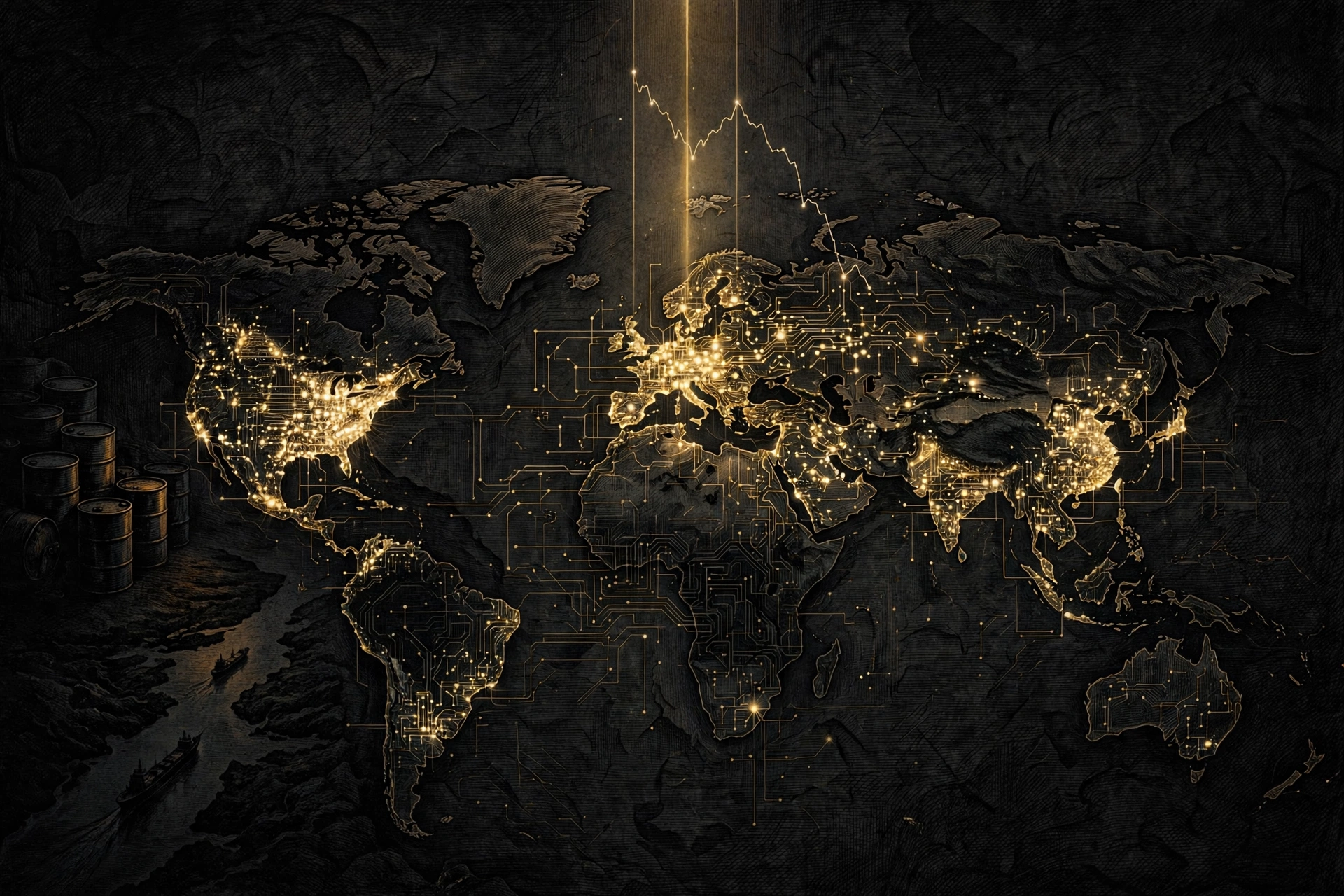
The map is the story
Thirty-two countries now account for 95% of global growth. In April the figure was 54. The IMF downgraded 47% of economies since April, including several energy importers outside AI value chains. The report identifies an increasingly uneven outlook, but does not attribute every downgrade to exclusion from the AI supply chain. The Gulf states sit at the extreme end, with Saudi Arabia swung from a forecast of 1.7% growth in July to a 3.3% contraction, and deeper recessions projected for Iraq, Kuwait, Qatar, Iran and the UAE.
At the other end, the upgrades read like a supply-chain map. Taiwan at 10.7% and South Korea at 3.3% are chip forecasts wearing national accounts. India is the exception that proves the rule differently: 7.0% in both years, driven by domestic demand and services alongside AI investment, and the largest upward revision among the big economies after the chip exporters. The US is forecast to grow 2.3% in both 2026 and 2027. The 2026 forecast is unchanged from July, while 2027 was raised by 0.1 percentage point; the benefits of AI investment are partly offset by imported equipment. China was cut, not raised: 4.5% this year, with weak domestic demand outweighing its own AI and export strength.
Both directions, in the same report
The WEO does not treat AI only as support. A reassessment of AI profitability is listed among the main downside risks, alongside a longer war, higher bond yields and extreme weather. The scenario arithmetic is symmetric enough to be useful: faster adoption and accelerated investment add 0.6% to global GDP by 2029, concentrated in the US and China; an AI productivity disappointment, followed by falling investment, asset-price declines and tighter financial conditions, could reduce global output by a combined 1.1% by 2028, including 1.8% for the US, with Asian technology exporters taking spillovers.
Put the two IMF reports from Bangkok side by side and the picture is consistent. The growth report says AI investment is holding the forecast up. The stability report, covered separately, says the borrowing behind that investment is now a transmission channel if it disappoints. Neither report calls a crash. Both now treat AI as a macro variable, which is the actual change: a sector forecast no longer contains it.
Sources
- [1] Reuters (David Lawder, October 13, 2026, Bangkok), via Duke FM syndication — IMF says AI investment is propping up global growth, but war and debt threaten outlookRead source
- [2] CNBC coverage of the WEO via EuropeSays (corroborates the 32-country concentration and Taiwan's 10.7%)Read source
- [3] Aju Press / AJP, October 13, 2026 (South Korea's growth outlook lifted to 3.3% on the chip boom): ajupress.com
- [4] IMF — World Economic Outlook, October 2026 (report and forecast database): imf.org