The 96% is real work, and a narrow claim
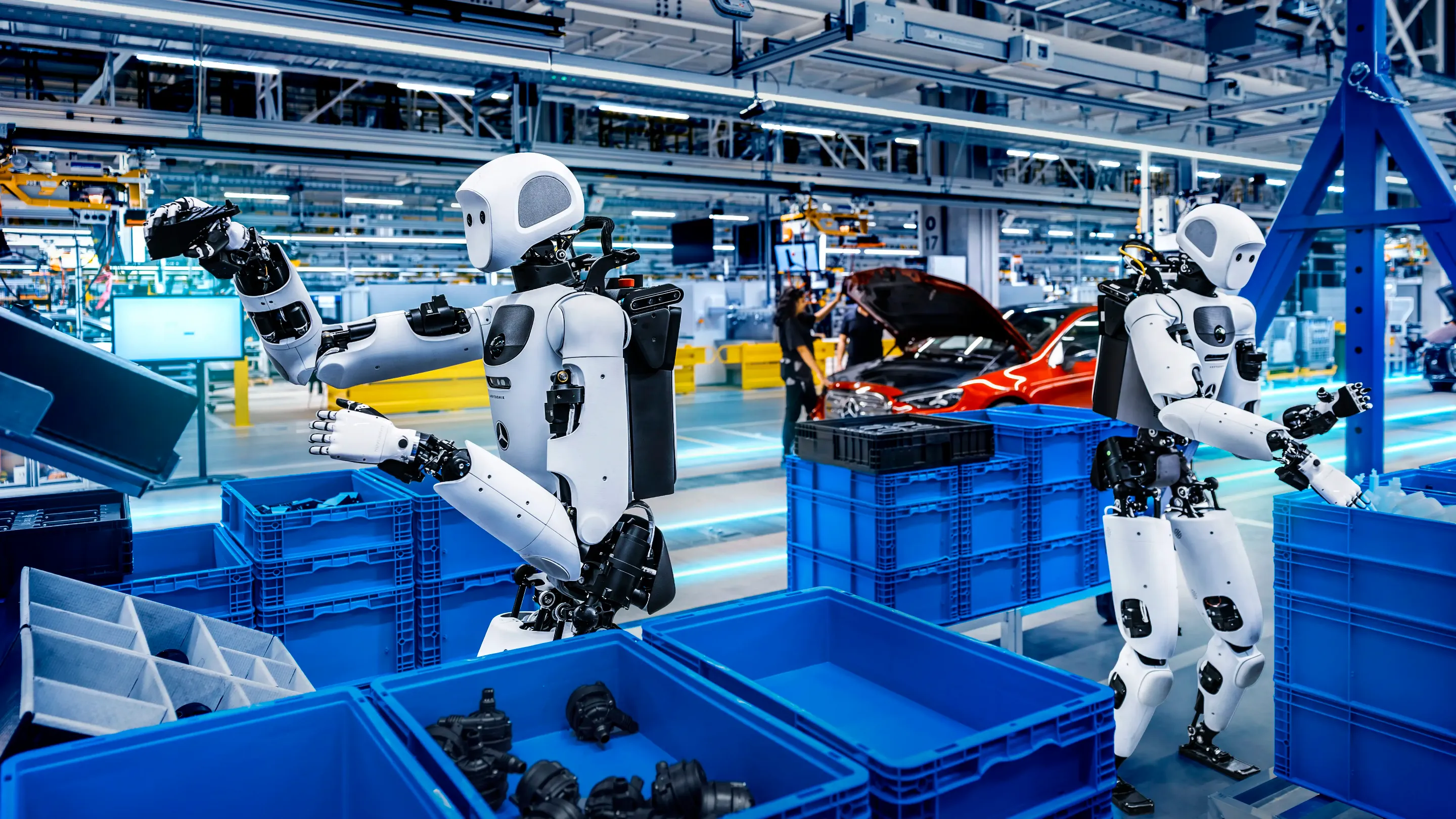
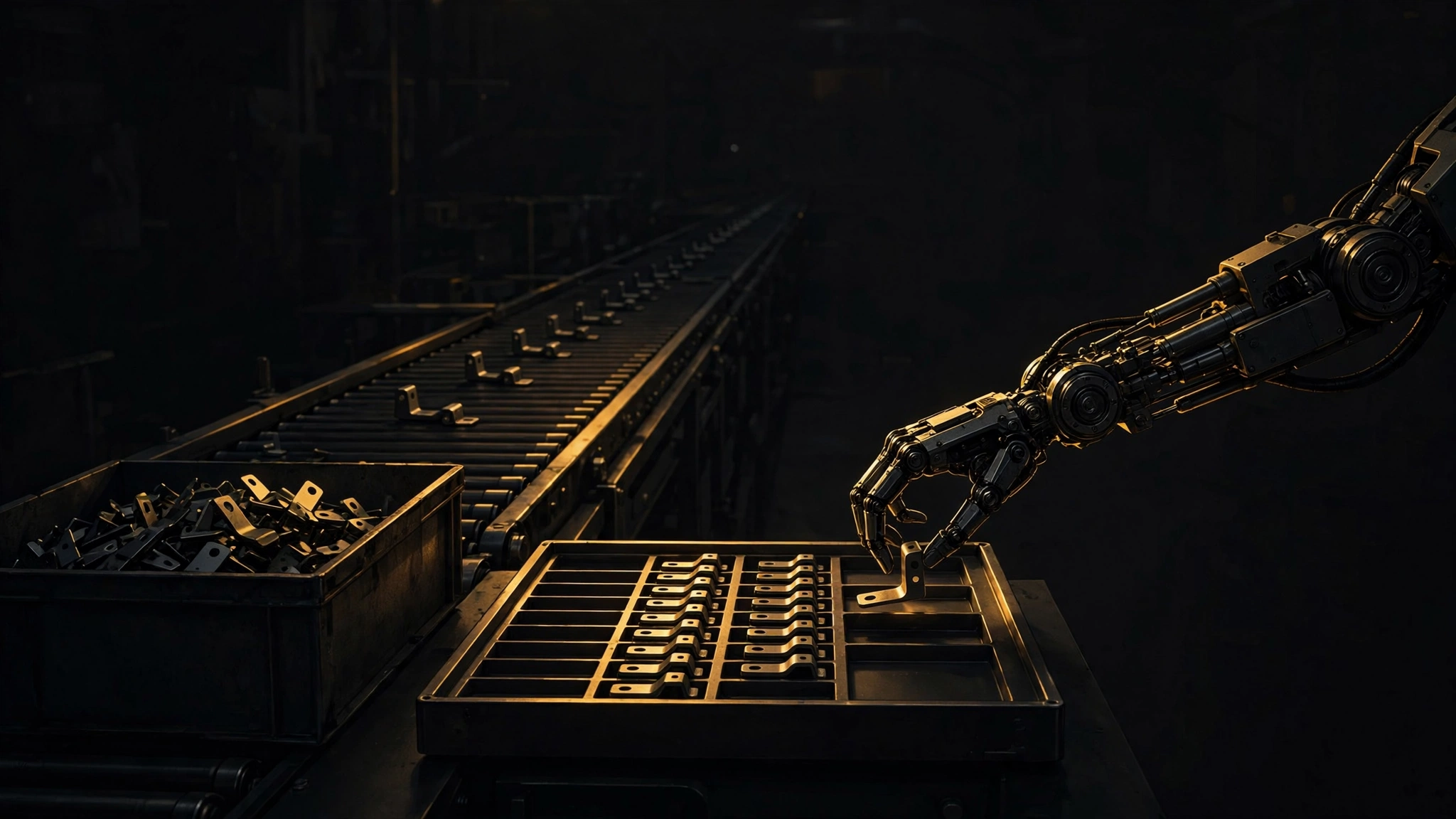
This launch has a factory floor in it, and the task is the right kind of unglamorous: taking metal brackets out of bulk bins and laying them into sequencing trays in the exact order the line will build. Kitting is repetitive, physical, and central to how the line runs.
Read the figure at that width. It is one task type, on lines set up with the model's developer and the robot's maker as partners, over a trial DeepMind calls a proof of concept. The post does not define the trial count or scoring unit behind the 96%, or describe failures and recovery — whether a human quietly fixed a tray or the line stopped. Those details decide whether 96% is a pilot result or a production number, and they are not in the launch post.
The wider numbers carry less
The breadth claim is softer than the factory claim. "30% to 100% higher success" across 200 tasks is a range so wide it mostly tells you the gains vary by task type. It is also relative: to take a purely illustrative case, a task that went from 10% success to 20% has doubled, and is still failing four times out of five. The post gives no per-task table. These are company-reported evaluation results that need task-level methods and external assessment.
That does not make the release empty. Moving from grippers to a five-fingered, 22-degree-of-freedom hand, and from single skills to 200 tasks that include deformable objects and pipetting, is the direction the field has been promising. It does mean the honest summary is: one factory task with a reported score, plus a large set of internal results that have not yet been assessed outside DeepMind.
The safety number belongs to a different model
The launch's second headline figure, 99.5% jailbreak resistance, is easy to misread as a property of Gemini Robotics 2.5 itself. In DeepMind's own post, that score belongs to Gemini 4 Argon on ASIMOV-Jailbreak, against 82% for Gemini Robotics ER 2, the previous reasoning baseline. The 99.5% result evaluates Argon. The Mercedes workflow is described separately as pairing Gemini Robotics ER, which tracks the workflow, with the 2.5 actions model, which moves the arms. A robot is the combination, so the number is relevant context. It is not a measurement of the new VLA alone, and it is not a physical safety rate for the combined robot.
The useful part of this section is the benchmark, not the score. ASIMOV-Jailbreak is public: DeepMind links an open-source release on Hugging Face, with hundreds of disguised unsafe requests across dozens of scenes, which researchers can inspect. That gives the 99.5% a way to be tested rather than merely repeated — though publishing a dataset does not by itself reproduce the reported score.
Who can get it
The launch material describes partner access and supplies no public API, price or general-access date. If your factory does not already work with DeepMind or Apptronik, this release changes nothing you can buy this quarter. Its near-term effect is on partner pilots, and on the comparison every other robotics lab now has to answer: Nvidia published its GR00T 2 results days earlier, and DeepMind's announcement is contemporaneous, a humanoid reported working a live line.
Sources
- [1] Google DeepMind, "Gemini Robotics 2.5: Accelerating Physical Intelligence", November 10, 2026 (all model claims, the 200-task evaluation, the Mercedes-Benz proof of concept and its 96% figure, safety steerability gains, ASIMOV-Jailbreak and the Argon 99.5% vs ER 2 82% figures, partner rollout; read first-hand by the ALFW desk)Read source