What shipped
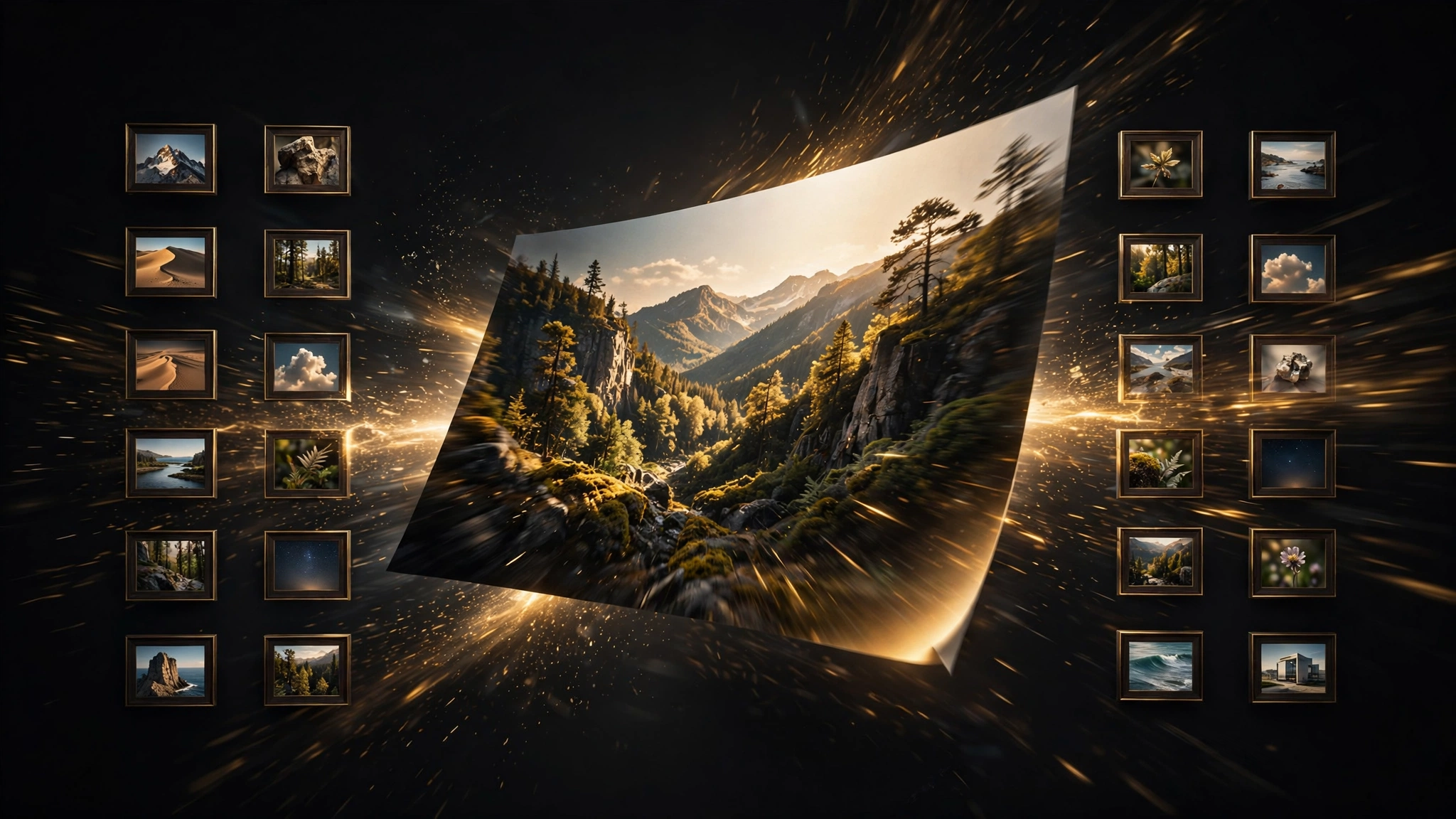
The headline number is resolution at speed. H3-Image produces about 16 megapixels at every aspect ratio it supports, from a square 4096×4096 to a 6272×2688 frame at 21:9, and it generates at that size directly rather than upscaling a smaller image. The model card puts the effective working range at roughly 4 to 20 megapixels, with the best results around 16.
Generation and editing share one checkpoint. Reference images are addressed in the prompt by position, as <Picture 1> through <Picture 16> in upload order, which is how the model keeps track of which reference should do what in an edit. That is a practical design for the workflows the H3 audience already runs: build a still at full resolution, then animate it, or request a restyled version using an existing frame as a reference.
The speed claim, in context
MiniMax says a full-resolution 4K image takes under 10 seconds, up to 5× the speed of mainstream alternatives, with Standard mode at 1.5–2× and a Highspeed mode at 3–4×. Those are MiniMax's launch figures. The sources reviewed provide no independent matched comparison on the same prompts and hardware, and the material does not establish performance on a reader's local hardware. The "state-of-the-art prompt adherence among open-weight models" line in the announcement is likewise MiniMax's wording, not independently verified.
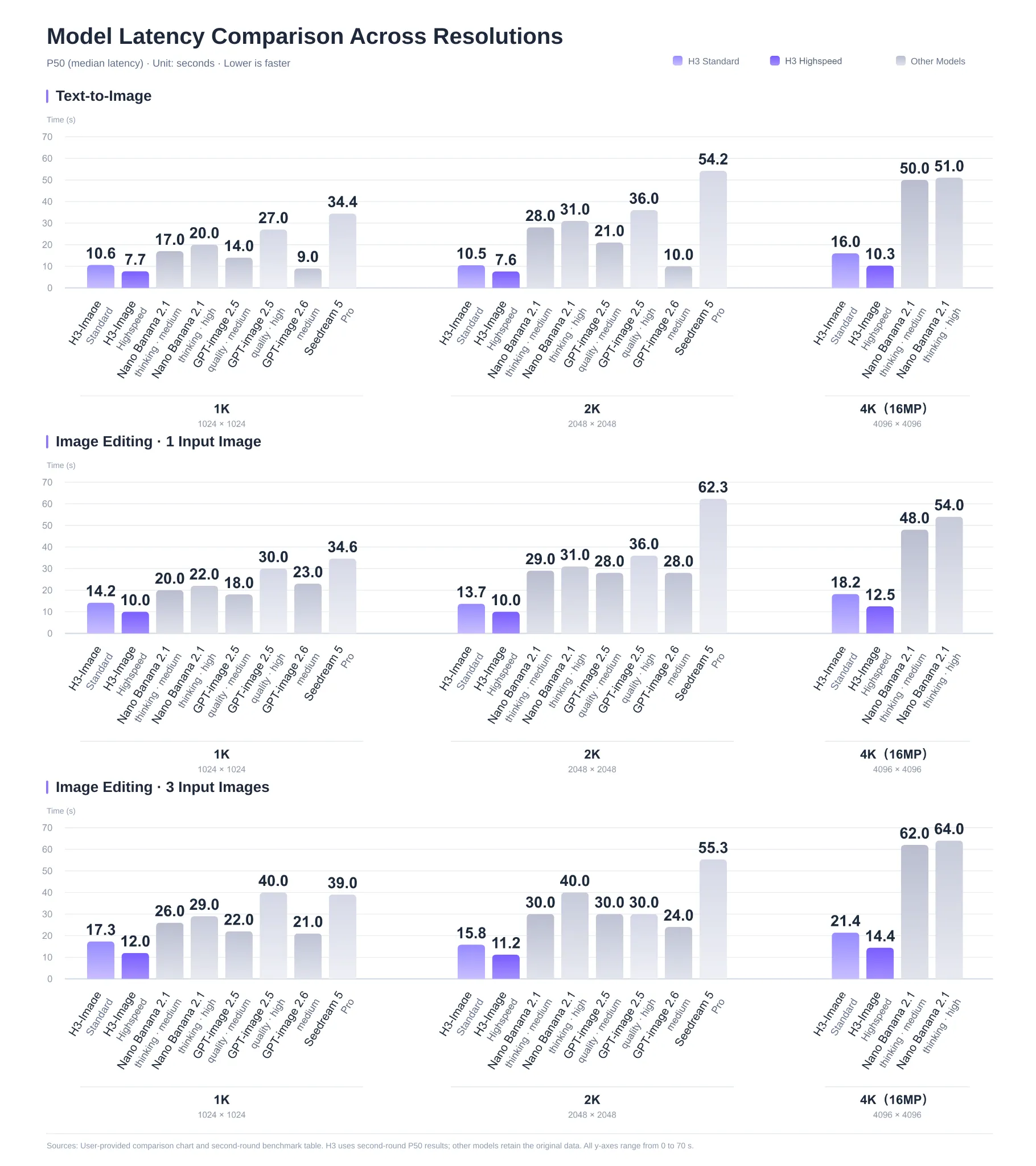
The 6-step sampler is the mechanical reason the speed is plausible. The checkpoint is distilled to exactly 6 sampling steps with no classifier-free guidance, and the documented serving implementation requires six steps and returns an error for other step counts. Fewer steps is a real speed lever. It is also a fixed recipe: on launch day, the showcase grid on the model card is the main quality evidence available.
Running it yourself is a bigger download than the headline
The open weights come with an asterisk the announcement does not mention. The 68.65 GB checkpoint does not include its text encoder. The model card states that `model_index.json` loads the encoder from the separate MiniMax-H3 repository, a further 66.7 GB, unless you already have the H3 video model downloaded. The full local download is therefore about 135 GB before the optional 17.9 GB prompt expander. That is a download figure, not a VRAM requirement; whether a given home setup runs it well depends on the documented hardware and serving setup, which the launch material does not quantify. "Open weights" is accurate. The under-10-seconds figure should not be read as a promise about a home GPU.
The license, again
H3-Image ships under its own Community License, dated November 10, 2026. The structure will be familiar to anyone who read the H3 video license: the "Applicable Territory" is the world excluding the European Union, the United Kingdom, South Korea and the United States. The community license excludes those territories from its geographic grant. Parties there must contact MiniMax about separate authorization; the announcement's general hosted-availability list does not resolve their eligibility.
One threshold moved. Section IV requires prior written authorization if your annualized revenue exceeds US$1 million, or, as a separate trigger, if you offer the model as a hosted service to third parties. The H3 video license set that revenue line at US$20 million. The new line is one twentieth as large, a 95% reduction, and it deserves more attention than the territory list, which at least is now expected.
Pricing, in a chart
The launch post's text gives no per-image list price. It claims pricing at 50–70% of comparable mainstream offerings, and its pricing evidence is a chart of example task costs, with a note that the costs are illustrative, not fixed per-image prices, because actual charges depend on token usage. The chart prices a 4K text-to-image generation at US$0.06879 in Standard mode and US$0.13001 in Highspeed mode. A launch offer takes 50% off images of at least 16.6 million pixels until November 17, 2026, 16:00 UTC, which puts the Standard 4K example at US$0.03439 during the offer. Third-party API metering (OrcaRouter, November 10) put a standard 4K generation at about US$0.069, consistent with the chart's Standard figure; treat channel prices as observations, not MiniMax list prices.
Sources
- [1] MiniMax launch post, "MiniMax H3-Image: Bringing 4K Image Generation into the 10-Second Era" (November 10, 2026), including its pricing chart of example task costs — read in full first-hand, chart includedRead source
- [2] Hugging Face model card, MiniMaxAI/MiniMax-H3-Image (sizes, architecture, download components) — read first-handRead source
- [3] MiniMax-H3-Image Community License Agreement (Excluded Territories; Section IV authorization triggers) — read first-handRead source
- [4] OrcaRouter, "MiniMax-H3-Image vs Nano Banana 2.1: price vs proof" (third-party API metering, November 10, 2026)Read source