Two days, one data center
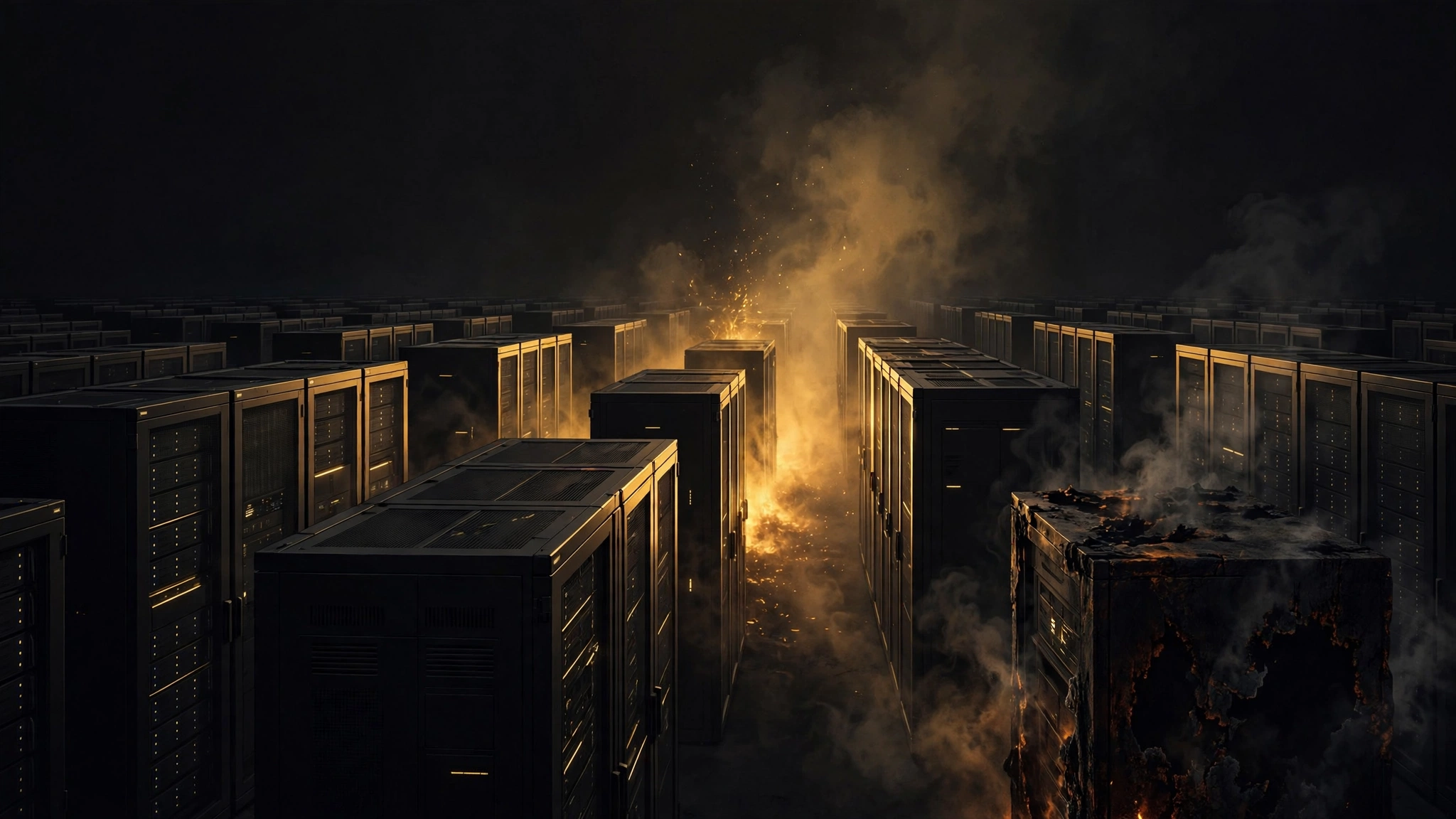
The fire started in the early hours of Thursday. Ukrainian drones hit Yandex's Sasovo data center in the Ryazan region, and the blaze forced the company to suspend operations at the site. On Friday, Ukraine struck again. The Seoul Economic Daily reported the second consecutive day of attacks, and President Zelenskyy confirmed on social media that Ukrainian forces had hit the facility, saying Ukraine is "mirroring" Russian strikes on data centers.
Reuters framed it plainly: the first major attack on a Russian data hub since the war began. Russia has spent the past month striking Ukrainian data centers and telecom infrastructure, including targets in central Kyiv. Now both sides have data centers on the target list.
What sat inside Sasovo
Sasovo is one of Yandex's five large data centers. Tens of thousands of servers live there, along with two of the three supercomputers Yandex uses to train its AI models: Chervonenkis and Lyapunov, both built on Nvidia A100 chips. These are the machines behind YandexGPT, Russia's leading large language model.
Chervonenkis once ranked 19th on the Top500 list, at 21.53 FP64 petaflops. That was 2021. Western sanctions have blocked Yandex from upgrading its systems since, and the machine would sit around 101st today. It is still, by a distance, the most capable training hardware Yandex has.
Here is the honest boundary on the facts. Yandex declined to say whether the supercomputers were damaged. Tom's Hardware noted that, judging by the scale of the fire, their chances of survival look low. That is an inference, not a confirmed loss. What is confirmed: the site is shut down, the fire was real, and Yandex says the damage is still being assessed.
Read the footnotes on this one
The AI infrastructure story has been a buildout story for three years. Trackers count gigawatts and purchase orders. This is the first entry where the news is a hub being destroyed rather than built.
The outage spread past Yandex. Downdetector logged more than 1,300 user reports across Yandex Cloud, Yandex Documents and Yandex Tables. NetBlocks recorded connectivity falling to around 70 percent of normal. Corporate systems at T-Bank, Ozon and Wildberries showed problems too. Yandex Cloud told customers there was a power problem in one data center zone and advised shifting workloads to others. Yandex shares fell 3.75 percent in Moscow morning trading.
The practical reading
If you run or rent AI infrastructure, this one changes the risk spreadsheet. Regional redundancy is no longer a billing nicety; it is continuity. The sanctions angle makes it sharper: for Yandex, replacement hardware is not just expensive, it is unavailable. A training cluster that cannot be rebuilt is a single point of failure wearing a building.
The correlated risk is the part insurers will price next. Energy facilities and refineries were already targets. Data centers joined them this week, on both sides of a war. Any model of AI infrastructure that treats physical destruction as a zero-probability event is now out of date.
Do not read more into the damage than the reporting supports. Two A100 supercomputers sit in a burnt building whose owner says it cannot confirm restoration. That sentence alone is worth more than any confirmed-destruction headline, because it is the one the company actually signed.
Sources
- [1] Reuters via LA Post — “Drones hit Yandex data centre in first major attack on Russian data hub”Read source
- [2] Reuters via Northland News Radio — “Russia's Yandex says unclear whether data centre can be restored after drone strike”Read source
- [3] Seoul Economic Daily — “Ukraine strikes Yandex data center for second day” (Oct 9, 2026)Read source
- [4] AI Weekly — “Yandex suspends Sasovo data center after Ukrainian drone fire”Read source
- [5] Oossa — “Ukrainian drones strike Yandex data center hosting two AI supercomputers” (updated Oct 9, 2026)Read source
- [6] SOFX — “Drones strike Yandex data center in Russia, halting supercomputers behind its AI models”Read source