One number, two projects
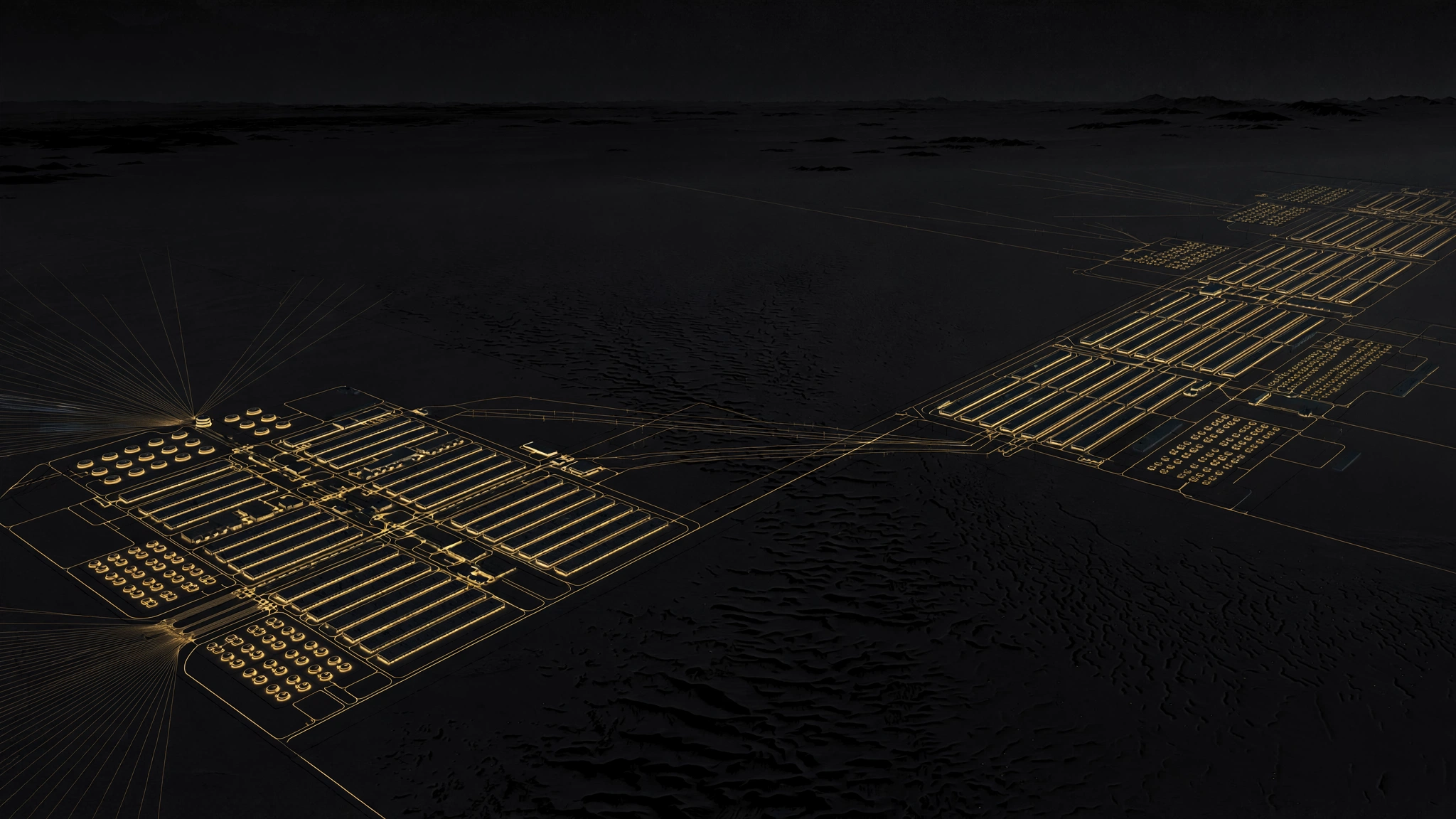
The $74 billion is a sum. SpaceX's November 12 post adds a Texas project priced at over $24 billion to an Arizona project priced at roughly $50 billion, and presents the total as planned investment. The company's table of the announcement, as carried by ConvergeDigest, labels the figures as planned or projected values rather than confirmed outcomes. The Texas number also carries its own wrinkle: the post's introduction says "more than $24 billion" while its detail section says SpaceX is "planning to invest up to $24 billion." The combined total is the company's arithmetic on its own two figures, not an independently reconciled number.
Parts of both projects were public before the post. Reporting by Voltgrid and MLQ through early November had already tied SpaceX to the 6-gigawatt Arizona proposal, filed under the name Tombstone Resources LLC and confirmed by the company at a November 4 meeting, and to a Starbase figure of roughly $24 billion in a city notice. November 12 is when SpaceX put both under one headline. The same post also describes a separate $100 billion Terafab chip project in Grimes County, Texas. That is a different project and is not included in the two-campus total.
Texas: the half with money already moving
The Starbase facility would sit on SpaceX-owned property near the Port of Brownsville and train frontier AI systems for medical research, emergency response, advanced manufacturing and national security work, while also serving as a testbed for space-based computing. It would generate its own electricity rather than draw from the public grid. SpaceX says the project has already generated more than 3,000 construction jobs, with more than 500 permanent jobs expected once it operates. The $24 billion is separate from the more than $15 billion the company says it has already invested in Starship and related infrastructure at Starbase.
The most concrete commitment in the announcement is water. SpaceX has committed $220 million to Brownsville-area water and wastewater infrastructure, and says $40 million has already been provided to the Brownsville Public Utilities Board. The projects, identified by the Southmost Regional Water Authority, are intended to add about 20 million gallons per day of capacity independent of the Rio Grande: 8 million through potable reuse and 12 million through expanded brackish-groundwater treatment. Brownsville and its utilities board keep ownership. SpaceX states it is acquiring no water rights and no preferential access, and will pay standard rates. The site covers about 444 acres disannexed from Brownsville to Starbase as part of the water agreement.
What Texas has not settled is the tax arrangement. SpaceX is discussing a property-tax abatement paired with negotiated payments to Starbase and Cameron County, arguing that computing equipment depreciates too fast for ordinary assessment to give local governments predictable revenue. Reuters reported the Starbase City Commission is due to consider the abatement on December 9.
Arizona: the bigger half, and the less settled one
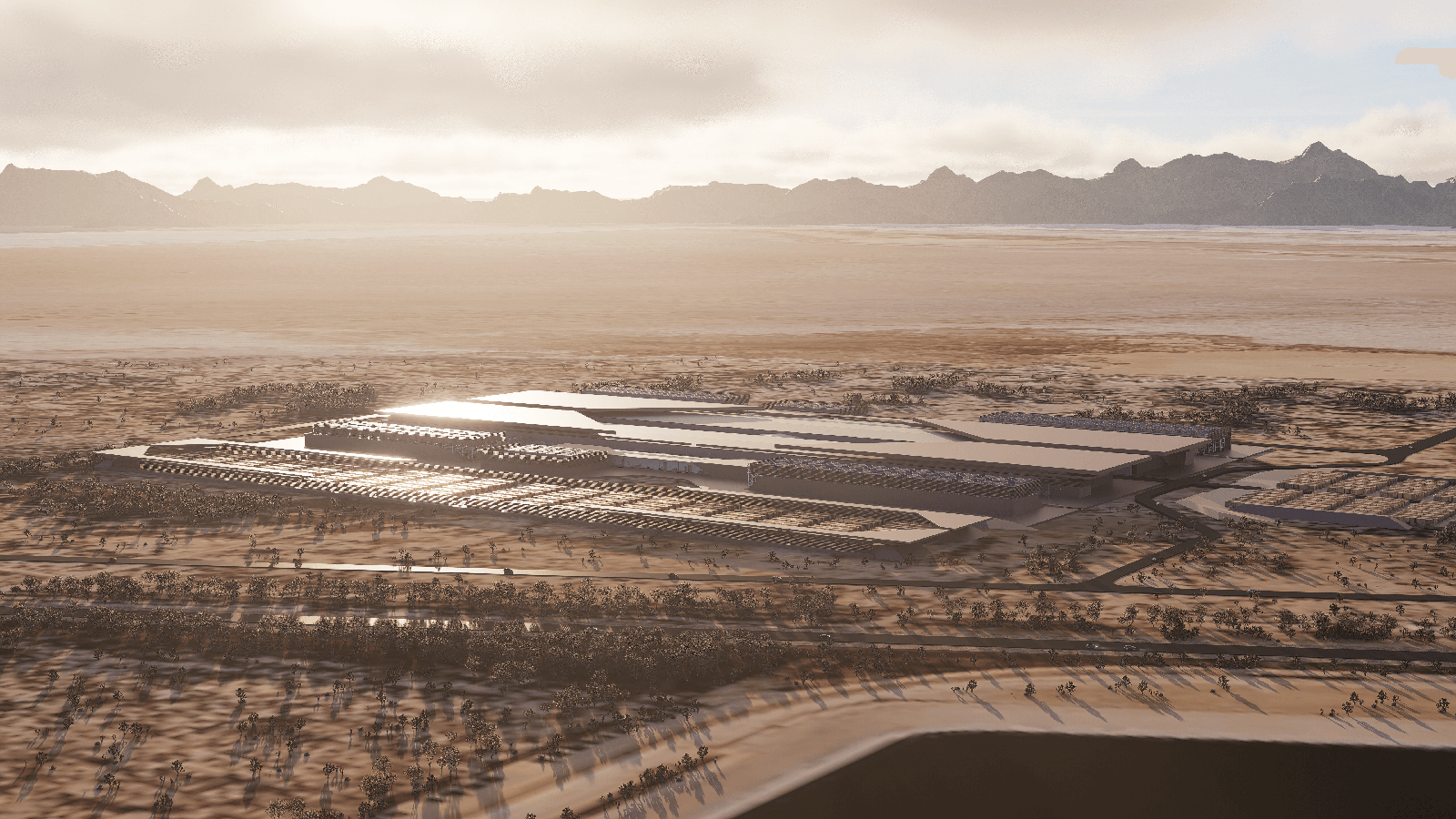
The Cochise County campus is the larger and earlier-stage project. According to Unite.AI's account of the county filing, the detailed plan covers 747 acres along U.S. Highway 191 near Willcox: nine single-story compute buildings of about 493,000 square feet each, designed for up to 6 gigawatts in four phases of about 1.5 gigawatts, with up to 24 gigawatt-hours of battery storage. Unlike Starbase, the site would draw grid power through the two cooperatives, with no on-site power plant beyond standby gas generation for outages and testing. Cooling is sealed liquid loops running to dry coolers. The plan estimates total water use at full buildout at up to 10 acre-feet a year, with no new wells and no industrial groundwater consumption.
The benefit figures need their sources kept attached. SpaceX's announcement post says the project could reduce electricity bills for cooperative members by up to 20%. The detailed plan, in the same account, projects a wider range, 10% to 40%, for SSVEC residential members over the life of the project, with up to $260 million a year going to SSVEC and up to $200 million to AEPCO at full buildout, their boards deciding how the money is allocated, and the final contributions still subject to negotiation. The plan also projects a one-time county sales-tax benefit of $250 million in the first year and $34 million to $103 million a year in new property-tax revenue. These are the applicant's projections in a permit application, which is the document whose approval is still pending.
That approval is the open question. Coverage of the county plan places the Planning and Zoning Commission hearing on the special-use application on December 9, and Reuters reported a petition of about 2,400 signatures asking officials to deny it.
What the announcement leaves blank
For a $74 billion computing plan, the computing is the unspecified part. The November 12 announcement names no accelerator supplier, no chip counts, no network architecture and no commissioning schedule for either campus, and states no electrical capacity for the Texas site at all. The Arizona 6-gigawatt figure comes from the county plan, not from a construction contract. The announcement also provides no contract-by-contract accounting of the planned investment.
The business context is real enough. Reuters reported that SpaceX's AI segment generated more than half of the company's third-quarter revenue, so the buildout sits on an operating business rather than a concept.
What to watch
December 9 carries both proceedings: the Cochise County hearing in Arizona and the tax-abatement consideration in Starbase. Neither proceeding guarantees a final decision that day. After that, the markers are contractual rather than promotional: a named accelerator supplier, a signed power arrangement with the Arizona cooperatives on final terms, and a construction schedule with dates. Until one of those appears, the $74 billion should be read as two announced investment plans, alongside a $220 million water commitment of which SpaceX says $40 million has been provided.
Sources
- [1] SpaceX, "Building the Future" supercomputing announcement, Updates page (November 12, 2026)Read source
- [2] Reuters, "SpaceX plans over $74 billion investment in Texas, Arizona AI campuses" (November 12, 2026), via KTWBRead source
- [3] ConvergeDigest, "SpaceX Unveils $74B Data Center Push in Texas and Arizona" (November 12, 2026)Read source
- [4] Unite.AI, "SpaceX Unveils Two AI Supercomputing Campus Plans in Texas and Arizona" (November 12, 2026)Read source
- [5] Voltgrid, "SpaceX Plans Over $74B for Arizona and Texas Data Centers" (November 2026)Read source
- [6] MLQ, "SpaceX plans more than $74 billion of AI supercomputing campuses in Texas and Arizona" (November 12, 2026)Read source