A version bump that changes the job
Qwen Code started as a terminal coding assistant: an open-source CLI that works inside a repository with a supported configured model provider. Version 1.0 Preview changes what the project claims to be. PANews, relaying IT Home, describes the merged Qoder and Qwen Code harness as an agent runtime foundation that other developers can embed in their own products — the machinery that plans tasks, calls tools, keeps session state and routes events, packaged for reuse.
The technical core of that claim, in the same reporting, is the event model: a unified model that separates reasoning orchestration from tool execution, beginning with an in-process, in-memory event bus and designed to scale outward to multiple nodes and sessions. If that holds up, the thinking part and the doing part can be observed, routed and extended independently. That is the difference between using a coding assistant and building on one. It is also, for now, a reported design: the 1.0 Preview release notes themselves say nothing about an event architecture, and the distributed runtime is a stated direction, not a shipped implementation.
Read the branch, not the number
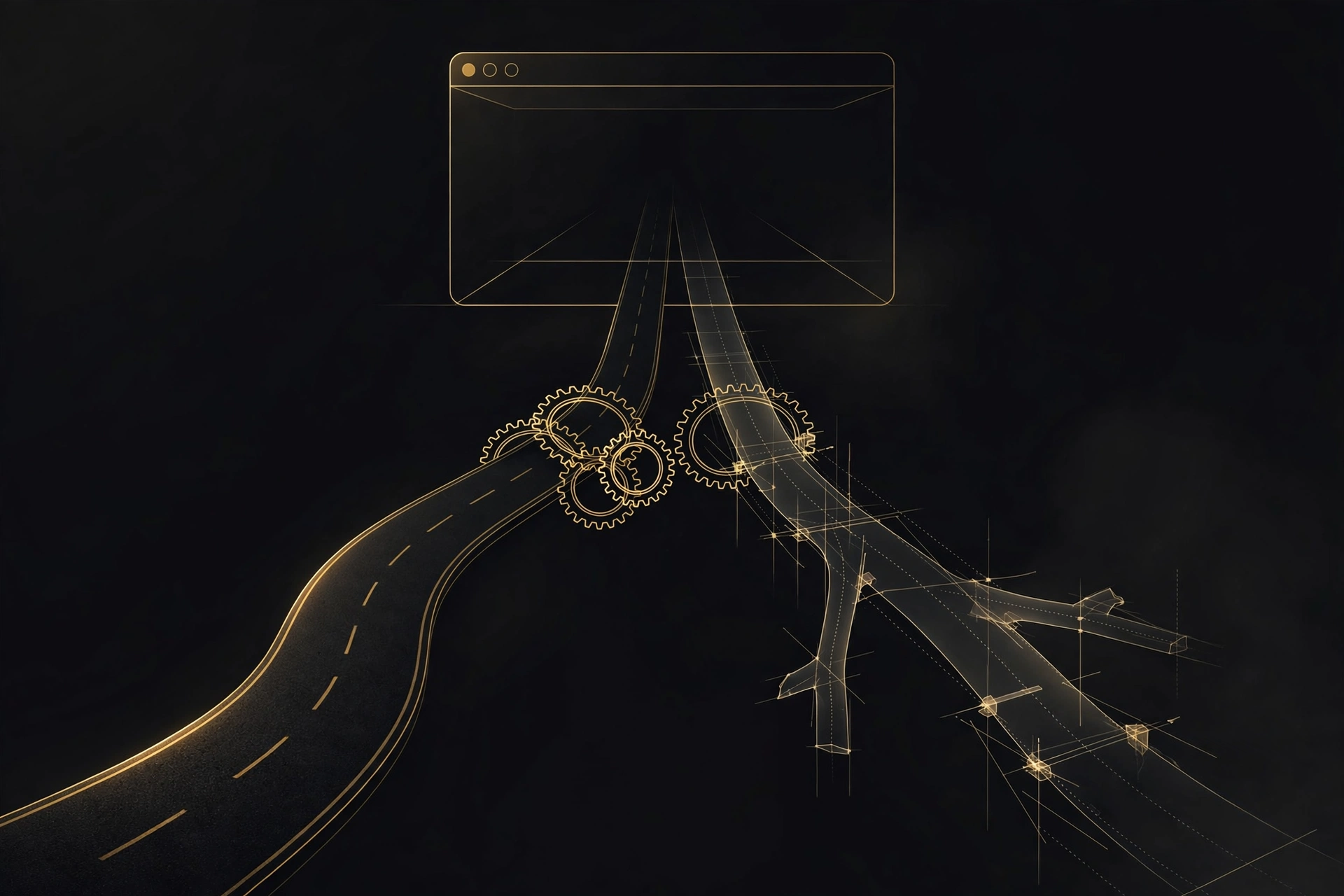
The qualification sits in the name, and Alibaba put it there plainly. The GitHub release is tagged v1.0.0-preview and flagged a prerelease; its notes warn that "some interfaces, configuration options, and behaviors may change during Preview." PANews, reporting IT Home, adds that the preview ships as a separate branch while the stable branch is retained — and the stable line is visibly alive, with v0.27.2 released as a full version the day before the preview appeared.
So the two natural readings of "1.0 is here" are both wrong in opposite directions. It is not a finished platform release to migrate production work onto, and it is not vaporware either: preview packages for macOS, Linux and Windows exist, with sign-in through a Qwen or Qoder account or a configured provider. For a developer deciding this week, the practical split is simple. The stable line remains the production choice. The preview is where the reported embeddable runtime can be evaluated, on preview terms.
The software is free. Model access is billed separately.
The second qualification is older and easier to miss because it predates this release. Qwen Code the software costs nothing and carries an Apache-2.0 license. What it runs on is a separate question: model access depends on the route chosen. Qwen's official authentication documentation presents Qwen OAuth sign-in as the "Qwen Account with Subscription" route, tied to a Plus or Pro subscription from chat.qwen.ai, and also documents Alibaba Cloud's Coding Plan and Token Plan, plus bring-your-own API keys, as alternatives. "Open source" answers the license question. It answers none of the budget question, and the budget answer is different for each route.
What would settle it
An embeddable harness is a platform claim, and platform claims are settled by other people's products. The signals to watch are concrete: whether the preview reaches the stable line and on what migration terms, whether Alibaba publishes stability commitments for the runtime interfaces, and whether any third-party product ships with Qwen Code inside it. Until one of those lands, Qwen Code 1.0 Preview is best read as a direction with downloadable evidence, released by a company that shipped a flagship model preview the same day. The tool preview and Qwen4-Max concern different layers of the agent stack: agent software and a hosted model. The software layer, for now, is in preview.
Sources
- [1] Qwen Code v1.0.0-preview release notes, GitHub (published November 11, 2026; prerelease)Read source
- [2] QwenLM/qwen-code repository (Apache-2.0 license; stable release v0.27.2, November 10, 2026)Read source
- [3] Qwen Code official documentation, authentication (Qwen OAuth with Plus or Pro subscription; Alibaba Cloud Coding Plan option)Read source
- [4] PANews, "Alibaba Releases Qwen Code 1.0: Qoder and Qwen Code Harness Merged and Open-Sourced" (November 11, 2026; reporting IT Home)Read source