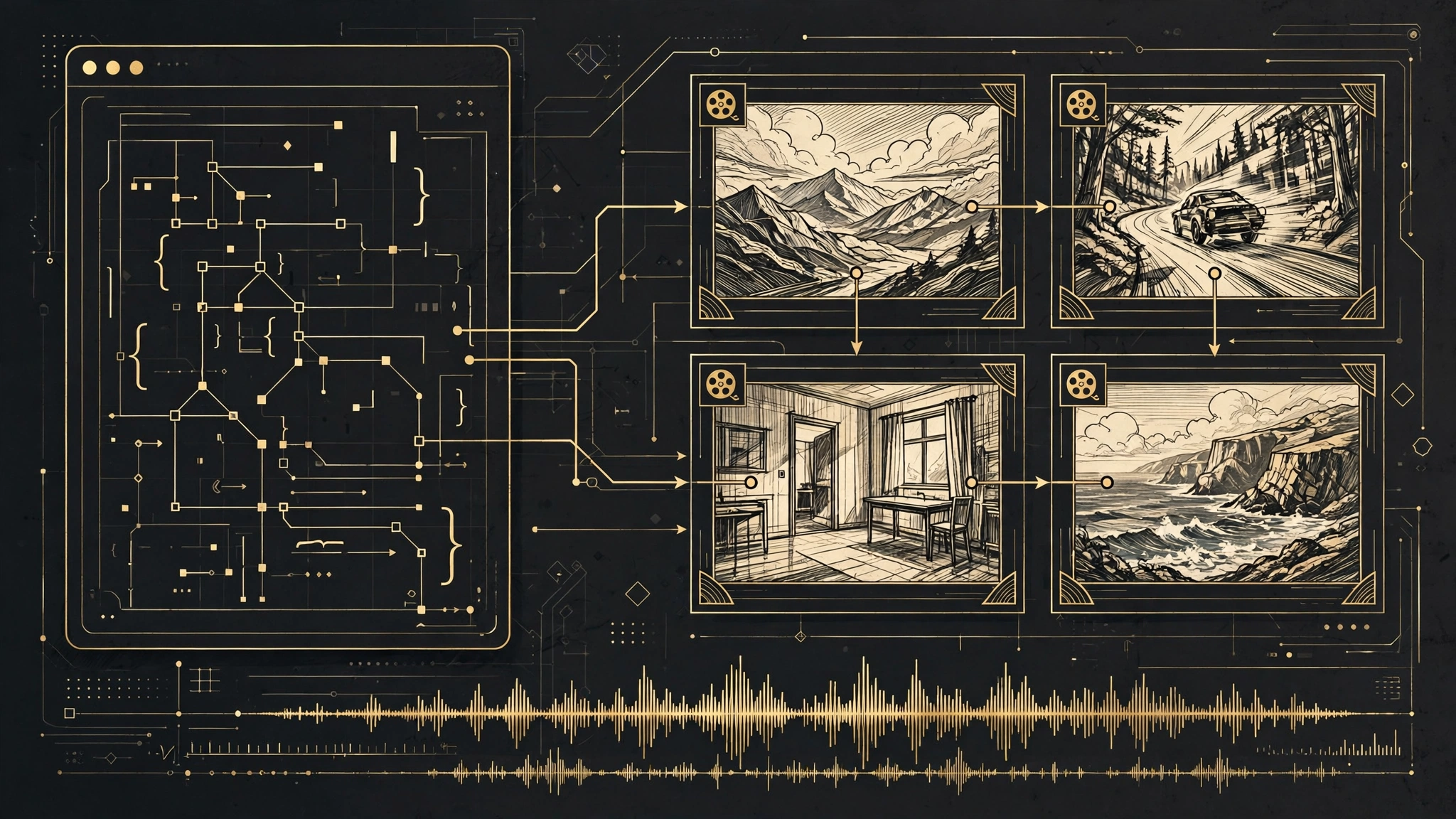
The product isn't the footage. It's the terminal.
Most video model launches sell you demos. PixVerse's V6 announcement does something different: it ships a command-line interface, and it names the coding agents that can call it. Claude Code, Codex, Cursor, OpenClaw. The pitch is that development teams embed video generation directly into production workflows and automate steps that used to need a person with creative software.
This is the video industry following the same road coding tools took. A model stops being a product you open and becomes a function your agent calls. Vidu launched its Q4 Preview a day earlier with better acting and $0.014-per-second pricing; PixVerse answered with better plumbing. Two Chinese labs, two flagship launches in two days, and they are not competing on the same thing. One sells performance. The other sells access.
Whether agents actually become video directors is unproven. But the positioning tells you where the money thinks this goes: the heaviest users of video models might not be filmmakers. They might be scripts.
What V6 claims, in plain terms
The model improvements read as a checklist of the things that have annoyed creators for two years. Camera movements, tracking shots, perspective shifts, environmental reveals, rendered with fewer artifacts. Character emotion that survives a scene change instead of resetting every cut. Objects that collide and move like they occupy the same space. Multilingual text inside the frame with accurate placement and consistent style across English and Chinese, which matters for anyone producing localized ads at scale.
The boldest claim: multi-shot short films with native audio from a single prompt. Their example is a product advertisement, generated in one pass, with no separate editing or audio production steps. That is the kind of claim that is trivially easy to demo well and punishingly hard to use well, because ad production is precisely where clients ask for revision number fourteen.
The release admits what still breaks
Give PixVerse this: its own announcement lists the weak spots. Precise directional control in complex scenes is still evolving. Consistency across significant spatial changes is still evolving. Those two items are the difference between a good 10-second clip and a usable 60-second sequence, and the company flagged them before anyone asked.
What the release does not say: pricing. "Launch discounts available for both individual and enterprise subscribers" is the entire pricing section, with no numbers. The 100 million creators and 175 countries are company claims, not audited figures. Every performance gain described is vendor-tested on vendor-selected content. Until someone runs it against their own worst-case prompt, treat the demo claims as marketing with good cinematography.
The practical angle
If you write code and have wanted video in a workflow, V6's CLI is worth an afternoon. Start with something small and adversarial: a three-shot product teaser with a text overlay in two languages, and watch where the camera direction drifts. The interesting failures will be at the cuts, not in the middle of the shots. That is where this generation of models still loses the plot, and no launch discount fixes it.
Sources
- [1] PixVerse via PR Newswire, "PixVerse Launches V6, Advancing AI Video Generation Across Creative and Agentic Workflows" (Oct 8, 2026)Read source