
Working capital, not growth capital
When a profitable company raises $445 million, the interesting question is not whether the unit economics work. The company has already told you they do. The interesting question is what eats cash in the hardware business: components, bought and paid for well before any rack ships to a customer.
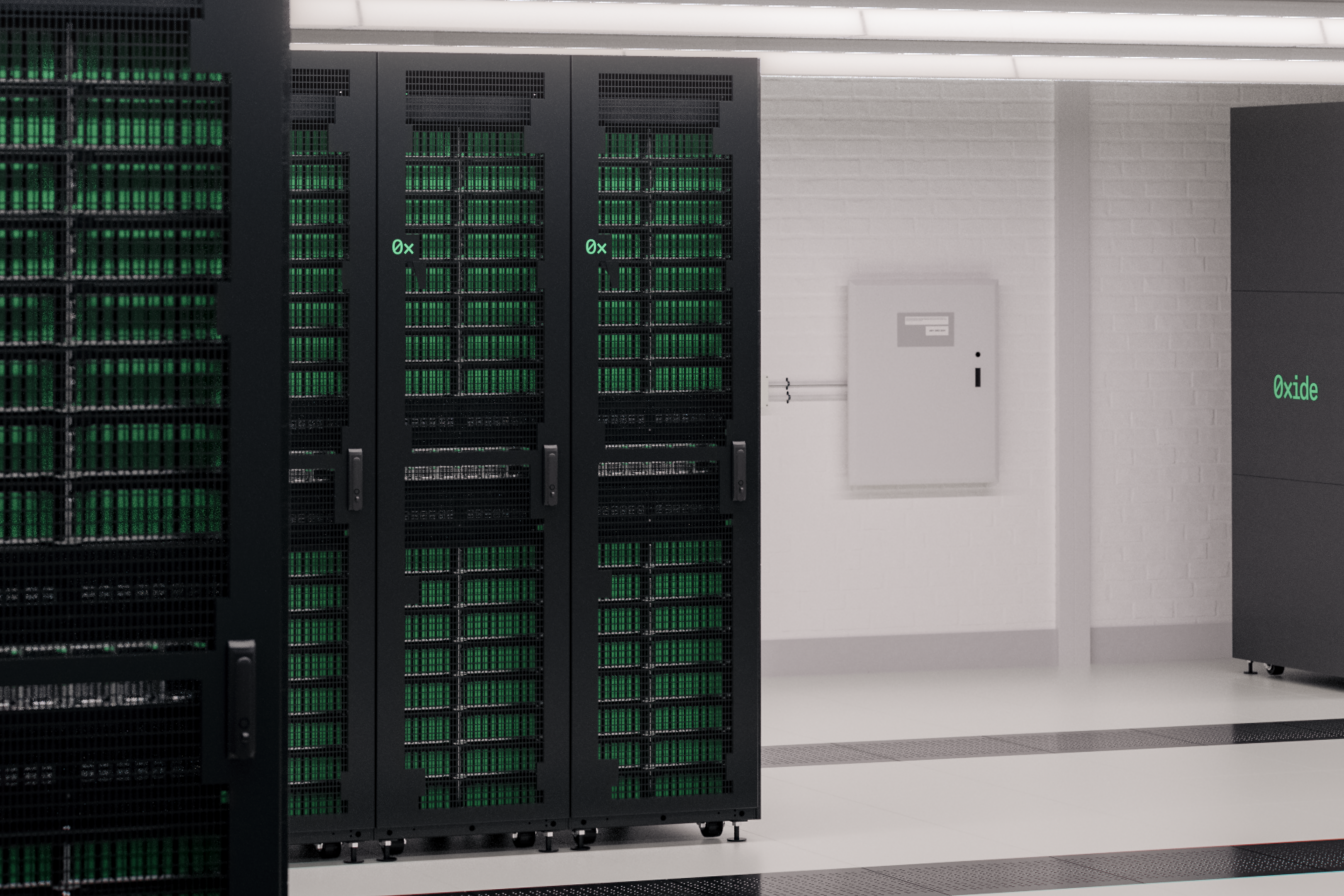
That is exactly where Oxide says the money goes. The press release frames the round as working capital to secure components, increase manufacturing and serve the backlog. In other words, every unit of unmet demand is a unit of cash sitting on a factory floor. The raise is the price of selling faster, not of surviving longer. That distinction makes this round legible in a way most AI funding announcements are not: no valuation theater, no "runway extension." Just purchasing.
Why the demand is landing on them
There is a second, more interesting story inside the announcement. Oxide's founding bet, made in 2019, is that enterprises want the cloud without the landlord: the automation, APIs and elasticity of hyperscale, on machines they own. For years that was a contrarian pitch aimed at banks and governments with sovereignty concerns.
The release ties the current wave to agentic AI, which is heavier on compute, memory and networking than chat workloads ever were, and to a market where, in Oxide's own telling, even the hyperscalers are struggling to keep up with capacity. Read that carefully. It does two jobs at once: it explains why enterprises want their own racks, and it explains why the backlog exists. If you cannot get compute in the cloud on time, you start asking whether the cloud is the right address at all. Oxide's customers are the ones who already answered that question.
The practical read
If you are planning AI infrastructure for 2027, treat this raise as a data point, not a recommendation. A profitable hardware vendor that still cannot build fast enough tells you where the real constraint is: not models, not money, but physical manufacturing and component supply. Expect lead times on dedicated infrastructure to stay long, and be skeptical of any vendor promising instant rack-scale availability while a visible backlog sits across the whole industry.
Sources
- [1] PRNewswire via ADVFN — “Oxide Raises $445M Series D as the Company Proves Vision of Full-Stack Cloud Infrastructure Enterprises Can Own” (Oct 9, 2026)Read source
- [2] Pulse 2.0 — “Oxide Raises $445 Million Series D Led By Eclipse” (Oct 9, 2026)Read source
- [3] CityBiz — “Oxide Raises $445 Million Series D to Expand On-Premises Cloud Infrastructure Manufacturing” (Oct 9, 2026)Read source
- [4] WOWTALE — “Oxide Raises $445M Series D as On-Prem Cloud Demand Outpaces Supply” (Oct 10, 2026)Read source
- [5] Oxide Computer — company homepage and official product imageryRead source