
What's actually in the kit
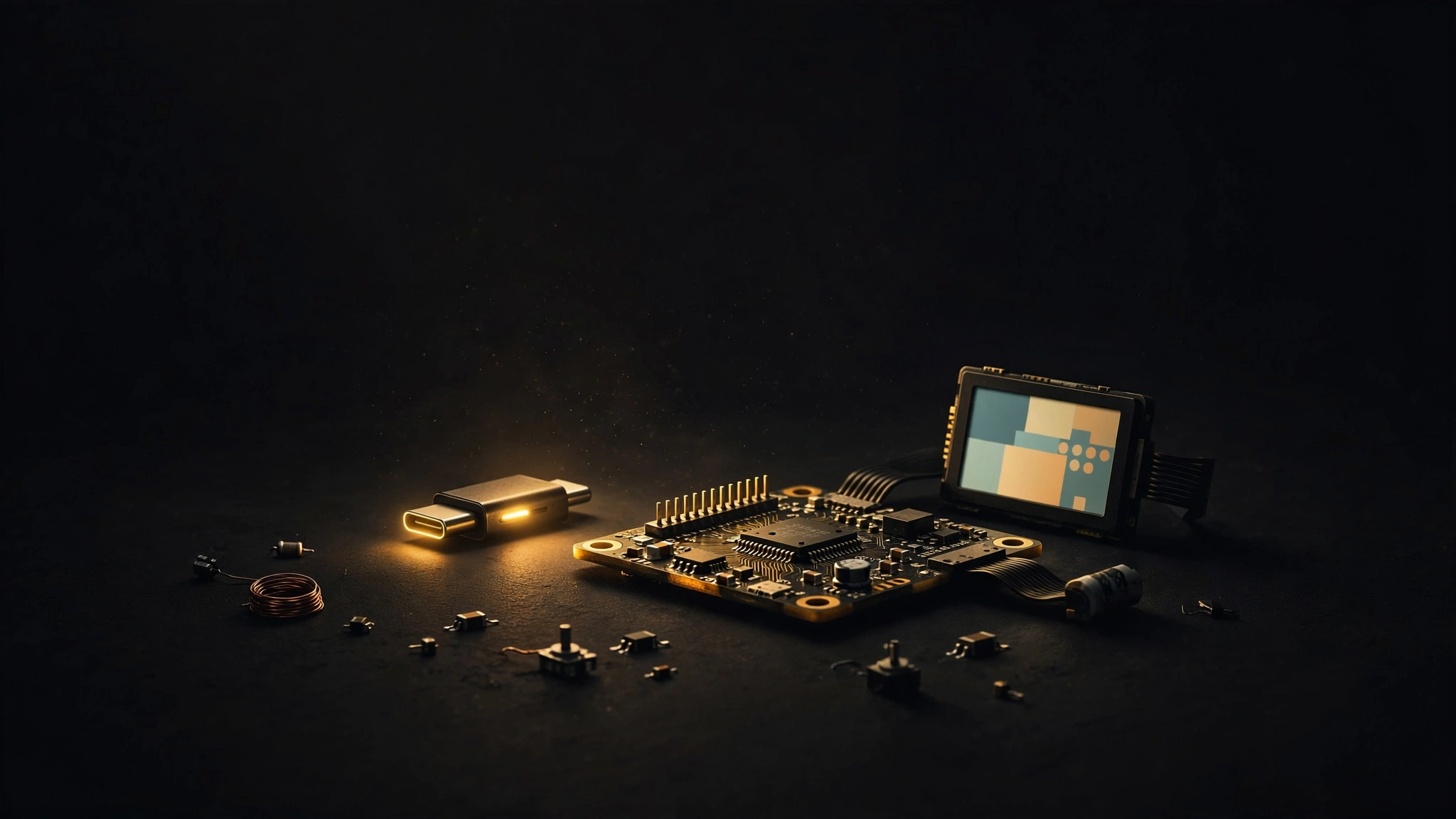
The open-source part is real, not a press release with a repo link that goes nowhere. There are two SDKs: ESP32 firmware for off-the-shelf microcontroller boards (add a screen, audio in and out, sensors), and a Linux SDK that turns a spare Raspberry Pi into a Muse gadget, including custom commands for sysadmin chores or Home Assistant setups. Developers pull an API token from gadgets.muse.ai, point their coding agent of choice at the GitHub repo (facebookincubator/muse-gadget-sdk), and build.
Meta seeded the project with starter builds: a round Waveshare AMOLED touchscreen with push-to-talk, a Seeed reTerminal color e-ink display for morning briefings, an M5Stack StickS3 pocket status screen, an AiPi Lite desk buddy, Home Assistant's Voice Preview Edition, and an HDMI stick for putting Muse on a TV that is listed as coming soon. A community Discord is already running — 156 members online at publication.
The site's tone is refreshingly honest about what this is. "It's built by hackers, for hackers, just for fun," it says, warning that side effects of tinkering "may include bricked boards, voided warranties, brownouts, or bankruptcies." Proceed at your own risk, in other words.
The giveaway, weighed
Five thousand dongles is nothing at Meta's scale. This is a seed batch, not a product launch. The Home Link is a small USB-C-powered puck that lets Muse reach a home network and talk to smart devices exposing an HTTP interface — lights, TVs, printers, via community-built skills. It is free to US subscribers, one per person, and claiming one only holds a place in line rather than placing an order. Shipping is expected within weeks.
The interesting number is not 5,000. It is the demand behind it: Nat Friedman's announcement post passed 30,000 views in a few hours, and developers are already building — Federico Viticci turned an Xteink eReader into an always-on Muse pocket display via MagSafe, with setup handled inside the Muse app. A frontier lab shipping its consumer assistant as DIY firmware with reference hardware attached is a rarer move than the open-source tally of the quarter suggests.
The timing question
Here is the part worth sitting with. Apple is restricting Full Disk Access on Mac specifically because AI agents "substantially" increase the risk of data exfiltration, and it cited Muse by name in the process. Meta's response, days later, is to ship hardware that plugs its agent into your home network and to invite anyone with a soldering iron to extend it.
Both moves are rational. Apple sees an agent that touches files; Meta sees an agent that needs a physical home beyond the phone. But "proceed at your own risk" reads differently on a device that can talk to your television and your printer than it does on a demo repo. Meta is outsourcing the agent's expansion to tinkerers at the exact moment another platform decided agents need tighter supervision.
What to watch
Whether anyone builds something beyond desk toys. Muse launched September 8 as Meta's first consumer-facing agentic app, and has since pushed into small business (free tier with Shopify, Dropbox, and Slack ties). Nat Friedman has acknowledged Muse was heavily inspired by OpenClaw, the open-source agent whose creator later joined OpenAI — so the playbook here is familiar: give the hackers the code and see what comes back.
The real test is a gadget that does something a phone app can't. If the community's best work stays in novelty territory, Muse remains a chatbot with peripherals. If one gadget becomes genuinely indispensable, every other agent lab will be shipping hardware kits within a quarter.
Sources
- [1] TechCrunch, "Meta wants your next gadget to be Muse-infused" (Oct 2, 2026)Read source
- [2] Engadget via AI Weekly, "Meta Open-Sources Muse Gadgets, Ships 5,000 Home Link Dongles" (Oct 2, 2026)Read source
- [3] OfficeChai, "Meta Open Sources Muse Gadgets, Lets Developers Build Their Own Hardware For Its AI Agent" (Oct 2, 2026)Read source
- [4] Meta's official Muse Gadgets pageRead source