What actually went up
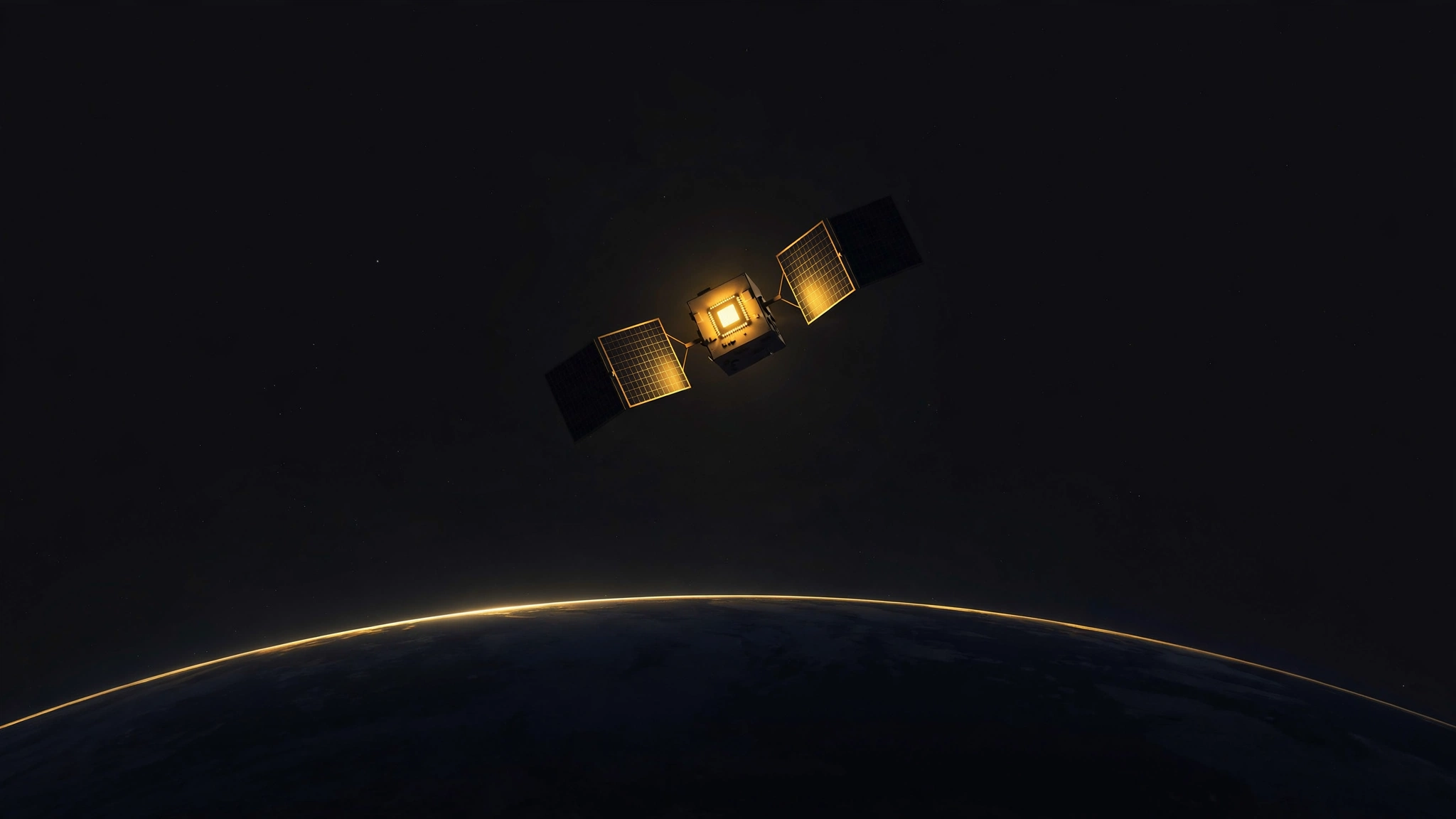
On October 1, a SpaceX Falcon 9 lifted off from Vandenberg Space Force Base carrying 130 payloads on the Transporter-18 rideshare. One of them was the first physical piece of Project Suncatcher: a refrigerator-sized prototype satellite built in partnership with Planet, carrying four of Google's Trillium-generation TPUs, the same chips Google uses in its data centers. Planet announced successful initial contact the same day, and Google said the satellite is operating as expected. The mission is planned to run for about a year.
What it is actually testing
The experiment is narrower than the headlines suggest. Google plans to spend the coming weeks collecting data on three things the ground cannot answer together: whether the chips survive launch forces, how they hold up against radiation, and how well the heat they generate can be shed in a vacuum.
Some of this was already tested on Earth. Google's Trillium TPUs withstood a radiation dose greater than what a five-year space mission would deliver, tested at UC Davis's Crocker Nuclear Laboratory. Launch is its own problem: components see sustained acceleration up to ten times the force of gravity, and individual chips face 50 to 100 g. In orbit, heat becomes the limiter. The chips run in roughly 15-minute bursts because there is nowhere for the heat to go.
Why Google is looking up
The September Google Research explainer laid out the bet plainly. In low Earth orbit, satellites sit in near-constant sunlight and can generate up to eight times more solar power than the same panel on the ground. Google wants to know whether clusters of solar-powered satellites could one day run larger AI workloads there.
Context matters. On Earth, data centers are fighting for grid capacity and hyperscalers are signing nuclear deals to feed their campuses. Energy, not chips or models, is becoming the binding constraint on AI infrastructure growth. Google is treating Suncatcher as a research experiment, not announcing a commercial orbital data center, and its published paper in the journal Joule documents the technical work. A bigger test is planned for 2027: two satellites flying together, each carrying dozens of TPUs, linked by laser interconnects.
What this does not mean
It does not mean an orbital data center. It does not mean Gemini from space. Nothing about token prices, Vertex, or Gemini APIs changed. Launch costs, networking bandwidth between satellites, hardware maintenance, and the raw economics of compute in orbit are all unanswered. Four chips on a rideshare do not move that line.
File this as a measurement, not a milestone. The interesting result won't be a launch photo. It will be the radiation and thermal data gathered over the next year, showing whether commercial AI accelerators survive space at all. That answer determines whether orbital compute is an engineering roadmap or a slide deck. Right now it is a slide with a satellite on it.
Sources
- [1] Google ResearchRead source
- [2] Planet Labs launch announcement (via Morningstar/Business Wire)Read source
- [3] MarketscaleRead source
- [4] AIStockWireRead source
- [5] RuntimeWireRead source
- [6] TechMyMoneyRead source