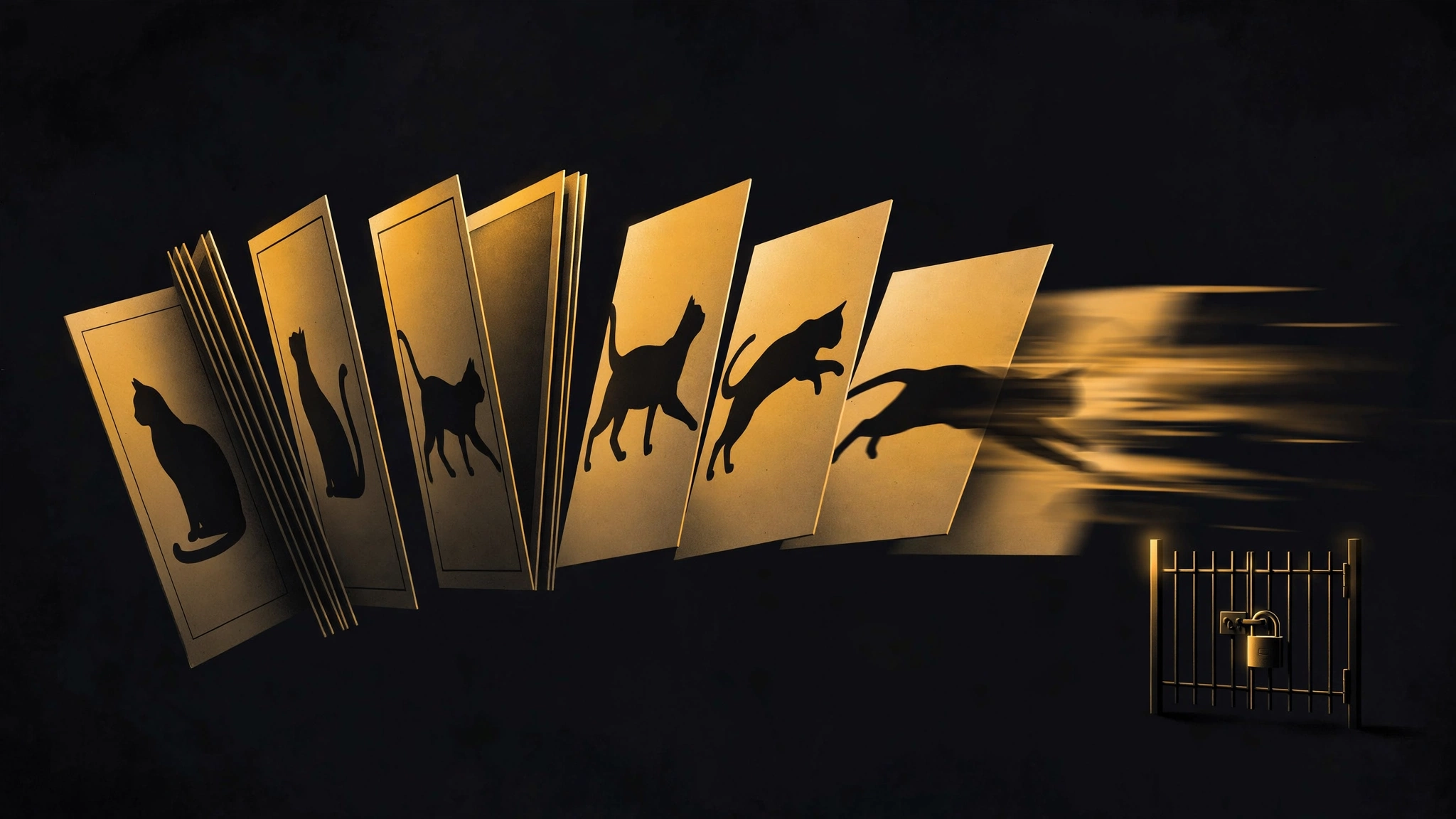
What a GIF made of stills can and cannot do
The Decoder's description matters here: this is not a video model. The sequence relies on generated still frames rather than continuous video. Keeping the subject recognizable across those frames is therefore important to making the animation usable, although the reporting does not establish which specific model improvements made the feature possible. That construction sets the ceiling. CryptoBriefing's reading of the November 3 Codex change puts the API-side range at 2 to 16 frames, with a default of 9 frames shown for 200 milliseconds each: a loop of roughly 1.8 seconds. That is a reaction GIF, a product wiggle, a logo pulse. It is not a substitute for the video generators this site usually covers. The distinction is important: Images 2.6, as described in the reporting, offers frame-based animation inside an image-generation workflow. It should not be confused with a continuous video-generation system.
Frame-level editing is the part with staying power. Anyone who has generated animation knows the failure mode: eleven good frames and one mangled hand. Being able to fix the single bad frame inside the same conversation, instead of rerolling the whole sequence, turns a novelty into a workflow. The spritesheet approach described in the code reporting — all frames laid out in one grid image — is an old game-development technique, and it is a sensible way to keep a character consistent across frames.
The developer gap
Read the rollout in two halves. The Verge reports that ChatGPT and Codex users are receiving the feature across web, desktop and mobile. Developers, however, have no publicly documented GIF-generation capability to build against. The two API models are named in the reporting, but the specific capability that makes this release news — GIF output through the API — is, on CryptoBriefing's account, present in code merged on November 3, switched off behind a feature flag, and absent from public API documentation. There is also, at draft time, no OpenAI announcement page for Images 2.6 that we could verify: the OpenAI link in The Decoder's story resolves to the September Images 2.5 announcement, which confirms the 3-billion-a-week baseline and the Flare/Sunburst split, but says nothing about 2.6 or GIFs.
That gap is the practical takeaway. A team designing a product around programmatic GIF generation cannot yet rely on a publicly documented Images 2.6 API capability. CryptoBriefing reports that the underlying Codex code contains GIF-generation support behind a disabled feature flag, but that implementation detail has not been independently verified. Until OpenAI publishes the capability and its limits, developers should treat API availability as unconfirmed. OpenAI's reported figure of well over 4 billion generated images per week across ChatGPT and its API deserves the same care. It counts all image-generation activity, not GIFs specifically. It is evidence of the scale of OpenAI's image-generation usage, not evidence that the new animation feature has gained traction.
What to watch
Three things will show whether this is a feature or a demo. First, an official OpenAI page for Images 2.6 with real limits: frame counts, resolution, and whether photo-to-GIF carries the same controls as text-to-GIF. Second, the API flag: public documentation for GIF output in GPT-Image-2.6 Flare or Sunburst would close the developer gap described above (this note reflects reporting as of November 4, 2026; if the documentation appears, the article should carry a dated update line rather than a silent edit). Third, whether the anticipated extras mentioned in some coverage, such as 4K output and markup-based edits, are ever confirmed by OpenAI — at draft time those are expectations in secondary reporting, not announced specifications, and this article does not treat them as fact.
Sources
- [1] The Decoder, "ChatGPT can now turn text prompts and photos into animated GIFs with OpenAI's Images 2.6 model" (2026-11-04, 19:44 UTC; read first-hand at Gate 1). The Verge's original report was not accessible to ALFW during research. Consumer-feature details were cross-checked against The Decoder, Unite.AI and XDA, all of which attribute their reporting to The Verge. These are corroborating accounts of the same original report, not independent confirmations of the underlying rollout.Read source
- [2] Unite.AI, "ChatGPT Adds Animated GIF Creation and Editing with Images 2.6" (2026-11-04; read first-hand at Gate 1; attributes the rollout to The Verge; notes the 4-billion weekly figure counts all image activity, not GIF use)Read source
- [3] XDA, "ChatGPT is getting GIF generation tools to make creating animated images a lot easier" (2026-11-04; read first-hand at Gate 1; attributes the rollout to The Verge)Read source
- [4] CryptoBriefing, "OpenAI enables GIF creation in ChatGPT with Images 2.6 update" (2026-11-04, 18:04 UTC; read first-hand at Gate 1). CryptoBriefing — sole secondary source for the reported Codex implementation details, including frame limits, spritesheet editing and the disabled API feature flag. Direct repository verification pending.Read source
- [5] OpenAI, "Introducing ChatGPT Images 2.5" (official; read first-hand at Gate 1; confirms the >3B images/week September baseline and the Flare/Sunburst API split; note: this is the 2.5 page — no official 2.6 page was verifiable at draft time or at Gate 1)Read source