For twenty-five years, the Blue Planet franchise has helped set expectations for increasingly spectacular underwater photography. Now, as generative video becomes more convincing, its producers are deliberately retaining some of the visual imperfections that earlier productions might have rejected.
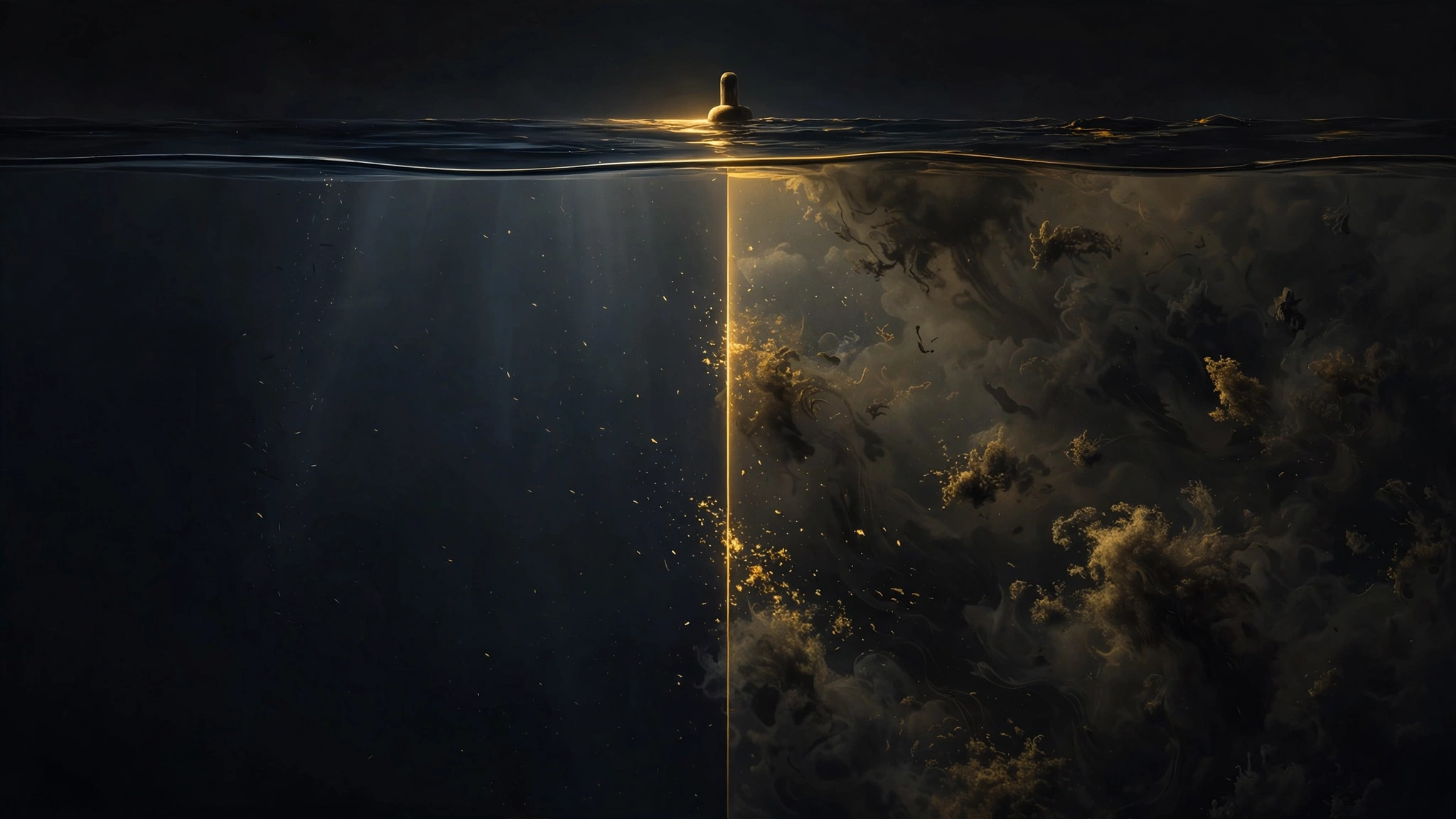
The decision surfaced ahead of the premiere, at a press screening reported on October 24. Executive producer Elizabeth White explained the reversal in practical terms. In earlier productions, the amount of plankton in the water would usually get a sequence excluded. The crew might have framed out a boat or a buoy, or decided the water conditions were not good enough. This time, those shots stay. "We're really leaning into that authenticity," White said. "As AI booms we will probably lean more into the more organic." Her reasoning is direct: AI "makes us want to be even more authentic," because the animals the crew filmed in the deep ocean "are probably more remarkable than AI could imagine and it's completely real."
The BBC's specialist factual commissioning head, Jack Bootle, put the production's position in one sentence for journalists: "No gen AI was used in this series. Not a single frame. It's all real photography."
A real production, making a real point
None of this is a gimmick pasted onto a thin series. The programme was filmed over four years across five oceans, and its new behavior sequences are the kind that used to settle authenticity questions by themselves. According to the screening coverage, producer-director Yoland Bosiger developed an underwater camera nicknamed the 'stonefish' cam that captured dolphins using sea sponges to block holes in coral and trap fish. The production describes the behavior as never previously filmed. The series also features a vast gathering of porcelain crabs feeding together. The screening coverage also describes sea urchins using shells as sun hats, and a grouper communicating with a fish of another species.
That is the context that makes the producers' worry worth taking seriously. When a real crew spends four years obtaining footage of animals doing things nobody has recorded, and a viewer's first instinct is to wonder whether a model generated it, something in the economics of attention has already changed. The murk is an attempt to answer that instinct inside the frame itself.
Why the murk will not hold as evidence
It will work for a while, because audiences do read roughness as honesty. It will not work as proof, for a simple reason: imperfection is a style, and styles are the easiest thing generative video does. Cloudy water, suspended plankton and a buoy at the edge of a frame can all be described in an ordinary video-generation prompt. That makes imperfection a potentially imitable visual style, not an inherently reliable marker of camera-origin footage. This is an inference about what generative systems can be directed to attempt, not a test showing that a particular model can reproduce these scenes convincingly. Once "authentic murk" becomes a recognized marker of real nature footage, it becomes a specification for fake nature footage.
Neither the Guardian's screening report nor the subsequent coverage reviewed by ALFW describes a content-provenance system, independent audit or public release of original footage supporting the BBC's assurance. That does not establish that the production lacks internal verification procedures; it means those procedures have not been documented in the reporting examined here.
The stronger assurance comes from the BBC publicly standing behind its production, not from the appearance of cloudy water. Institutional accountability gives that statement weight, but it is different from independently checkable provenance.
That distinction matters beyond one documentary series. Every producer of real footage now faces the same choice the Blue Planet III team faced, and the temptation will be to reach for visual signals first, because they are cheap and immediate. The durable answer is less photogenic: provenance records, preserved originals, and makers whose past claims can be checked. Rough edges can support that record. They cannot replace it.
Watch the audience, not just the ocean. If audiences begin associating visible imperfections with authentic footage, other producers may adopt the same visual language. Synthetic-video creators could imitate it too. That possibility is precisely why a recognizable aesthetic should not be confused with provenance. Blue Planet III has identified the right problem. Its solution is a bridge, and bridges get crossed from both directions.
Sources
- [1] The Guardian, “Blue Planet III features cloudier footage to prove authenticity amid AI boom” (October 24, 2026) — the press screening report: Bootle's assurance, White's authenticity comments and the production details; the full text was read by ALFW via the article's syndicated copy ahead of publicationRead source
- [2] The Verge, “Blue Planet III is keeping the rough edges in the age of AI” (October 25, 2026) — its version of the screening story: the retained plankton, boats and imperfect water, and the sponge-fishing dolphinsRead source
- [3] Radio Times, Blue Planet III review (October 2026) — read directly by ALFW; describes an episode-three colony of 200 million porcelain crabs off Chile, a figure that conflicts with the screening report's crab count, so this article publishes neither numberRead source
- [4] Radio Times, “Blue Planet III release date confirmed by the BBC” (October 2026) — broadcast details: the six-part series starts Sunday 1 November at 8pm on BBC One and iPlayerRead source