The lock is the product
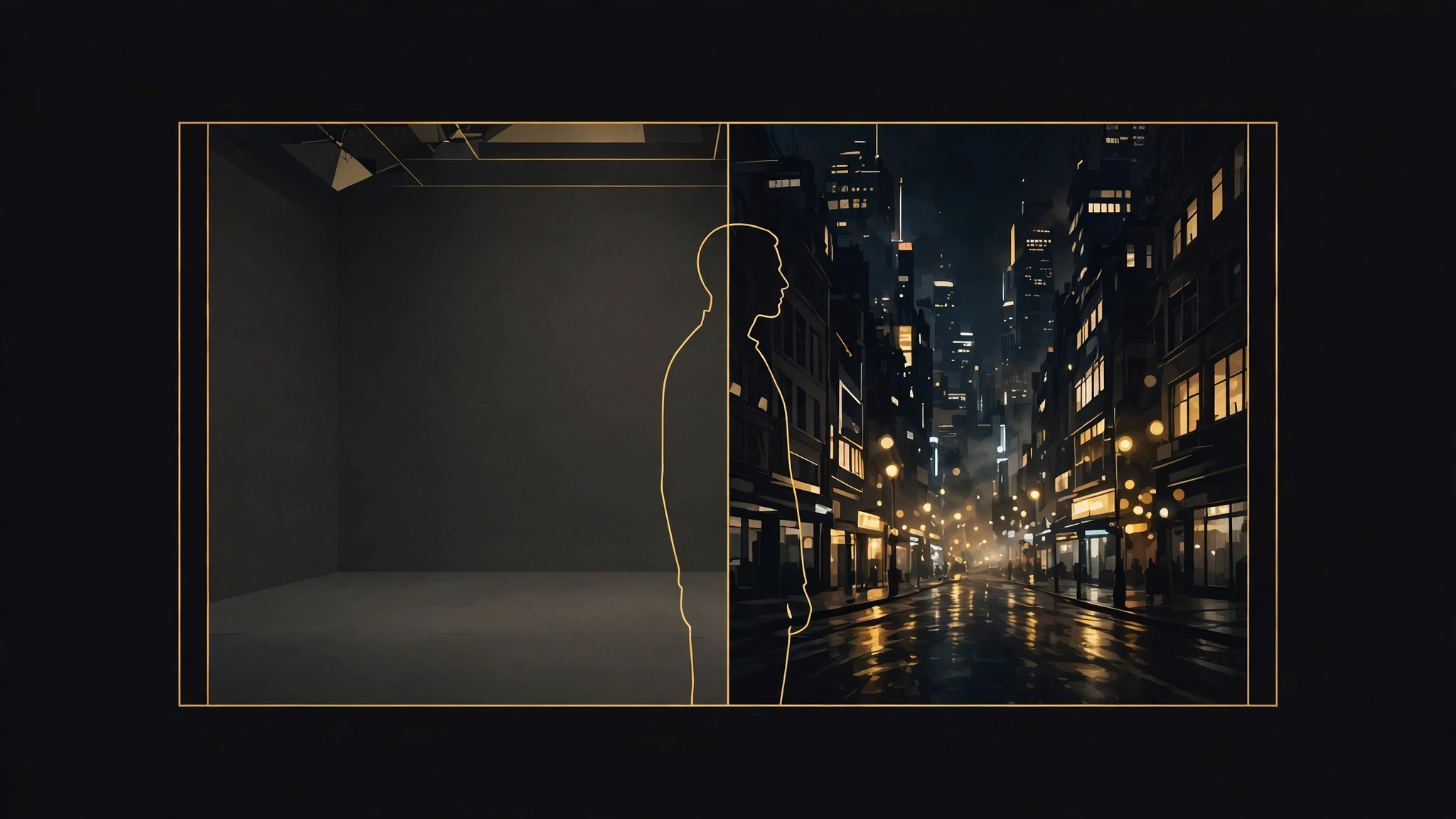
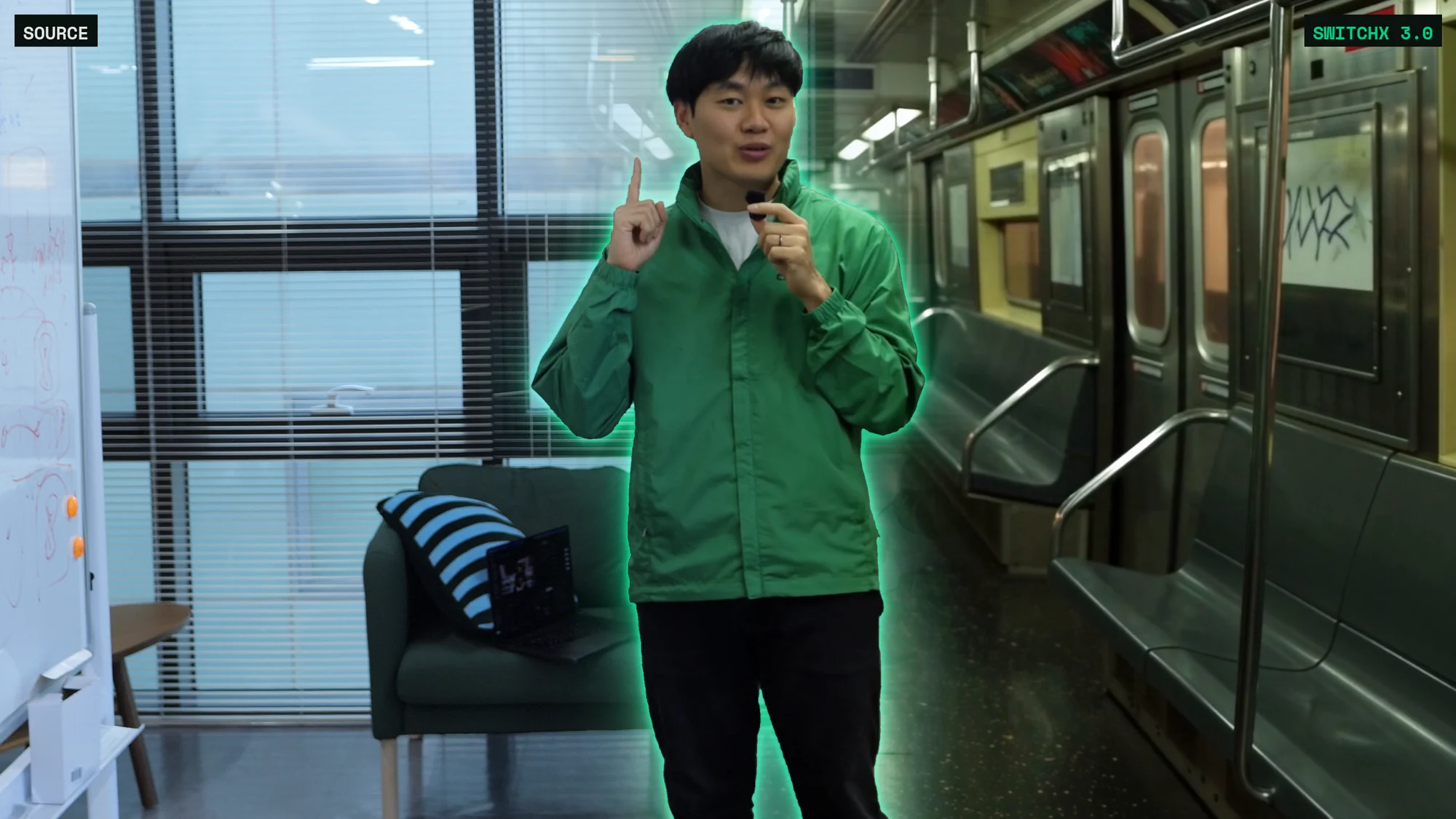
Most video generators rebuild the whole frame, performance included. SwitchX works the other way round. An alpha mask marks what stays: inside the mask, Beeble says the original pixels are kept frame for frame and only relit to fit the new scene. Everything outside the mask is generated from the prompt and reference images. Beeble calls this Source-Locked Rendering, and its documentation aims the tool at filmmakers and VFX artists rather than casual creators. A take an actor already nailed does not need to be re-performed by a model.
Version 3.0 keeps that contract and changes the engine underneath it. The new model is built on MiniMax H3, the open video model behind Hailuo. Beeble says it took H3 apart and rebuilt it for this one job, with its own dataset and architecture, and added a finishing pass at up to 4K that reads the original footage again to recover detail. That last point matters more than it sounds: the Finish pass re-renders from the source instead of only enlarging the generated image. The demonstrations cited here are Beeble's own.
What actually changed
Four things, by Beeble's account. A generation can now use up to four reference images instead of one, and the examples are practical rather than decorative: a wide of the set, a prop close-up, a storyboard that tells a billboard in the shot which card to show in which order. Backgrounds move. In 2.0 the generated world mostly sat behind the subject; in 3.0 traffic passes, crowds walk through the frame, snow falls on the performers. Camera tracking is now part of the model itself, following handheld, orbit and running shots with no tracking markers and no match move. Prompt control is tighter, to the point where the launch examples specify timing: pigeons take flight as the actor runs past, ceiling lights switch on one by one as he approaches.
Two of those changes come with conditions worth reading. Camera tracking in 3.0 has no off switch. The documentation is plain about it: tracking is part of the model, so there is no On/Off control, where 2.0 let the user follow the source camera or ignore it. A tool that is always tracking is simpler, right up to the shot where you wanted the world to stay put. And the word Beeble uses for the tracking, in both the research post and the launch film, is "perfect". That is a claim from the vendor's own demos, shot and selected by the vendor. The sources reviewed provide no independent evaluation of SwitchX 3.0's tracking.
Shorter clips, same meter
The version table in Beeble's documentation is where the upgrade gets complicated. SwitchX 3.0 generates up to 360 frames per clip. At 24fps that is 15 seconds; the frame rate of the output always matches the source, so at 30fps the same cap is 12 seconds. SwitchX 2.0 generated up to 480 frames, 20 seconds at 24fps. The pricing page prints the same two frame numbers side by side. Nothing in the launch post mentions the reduction.
The per-second credit rates, Beeble says in its launch video, are the same as 2.0, and the published rates are 6 credits per second at 720p, 20 at 1080p and 80 at 2160p. Run those against the plans, as of November 11, 2026. At 24fps, the 360-frame maximum is 15 seconds; at the published per-second rates, that output costs 300 credits at 1080p — more than half of the Creator plan's 540 credits a month — or 1,200 credits at 2160p, half of Professional's 2,400, and 2160p with 10-bit MOV export is Professional-only in the first place. Creator is $19 a month, or $16 per month billed annually; Professional is $75, or $60 per month billed annually. Unused subscription credits do not roll over. The workflow Beeble itself documents fits that meter: explore at 720p, then use the Finish pass to re-render the chosen take at 4K, rather than generating at delivery resolution from the start.
Access starts at paid. SwitchX is not available on the free tier, which offers 90 credits a month for the VFX Pass Generator and 3D Relight tools, for non-commercial use only. In the cloud app, 3.0 is available as a node in Beeble's canvas or on the standalone SwitchX page.
Sources
- [1] Beeble, "Introducing SwitchX 3.0," research post, published November 10, 2026Read source
- [2] Beeble documentation, "SwitchX 3.0" (source specs, mask modes, model-version table, camera-tracking note), updated November 11, 2026Read source
- [3] Beeble cloud pricing page (plan prices, credit rates per second, frame limits, free-tier limits, credit expiry), read November 11, 2026Read source
- [4] Beeble, "Introducing SwitchX 3.0," launch video description ("clips up to 15 seconds, output up to 4K, at the same credit price as 2.0")Read source