What shipped
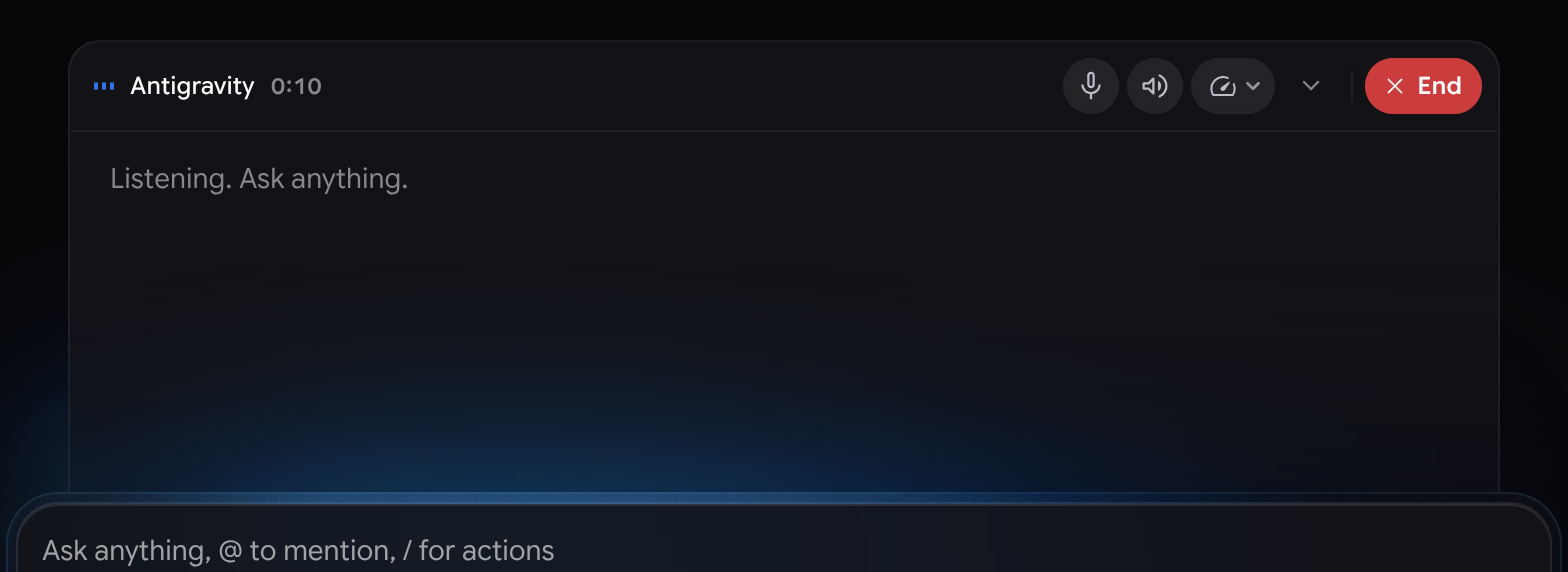
Voice mode turns an Antigravity conversation into a spoken, two-way exchange. You describe the task the way you would to a colleague, the agent confirms what it is about to do, and the work proceeds in the conversation as text, code and results, while the outcome is read back to you. Mid-task steering is the point: add a forgotten detail, correct course with an instruction such as "just check it, don't change anything yet," ask what the agent is doing, or say "stop" and have the running task halt. The meaning of "stop" depends on the state of the conversation. During a running task, it requests that the agent stop the work. While a permission prompt is waiting, Google says "stop" or "cancel that" denies the pending request.
None of this changes what the agent can do. Google is explicit that voice mode does not replace the conversation; it gives the conversation a voice. The Gemini Live model can reach only the conversation voice mode was started in, and file edits, commands and tools run under your usual permissions, with the context of anything you typed earlier. Ending the voice call does not stop an unfinished coding task; the agent continues working in the conversation.
The approval line
Permission prompts are where voice stops being a convenience and becomes a policy question, and Google's answer is split down the middle. When the agent needs approval, it reads the request aloud, gives its recommendation, and waits. For eligible actions, spoken approvals can apply once, to the conversation, to the project or globally through "always allow this." These options are not available for every request: Google says some risky actions can be approved only once, while destructive actions cannot be approved by voice at all. The agent's existing permission rules still govern what it may do. Saying "stop" while a prompt is waiting counts as a denial.
Destructive actions sit outside the voice-approval path. Google lists file deletion, elevated commands and force-pushing as examples. The agent may request them, but the user must click Allow on screen. Voice can still deny the request. Note the asymmetry: your voice is trusted to refuse anything, including the destructive actions, but not to authorize them. Refusals are cheap to reverse. Deletions are not.
Where it does not work
The limitation list is short and worth reading before the demo reels. In the App, voice mode works only in local conversations. It is not available in Remote Control sessions or in conversations that run in the cloud. It can be on in only one conversation at a time, and it cannot be started inside a subagent's conversation or a side question. The CLI version excludes print mode and remote-agent sessions.
The distinction is between local agent conversations and cloud or remote-agent sessions, not between sitting at a desk and connecting remotely. The CLI can use a workstation microphone over SSH through agy mic-serve, but voice mode does not support remote-agent sessions. Google's current implementation therefore leaves out important unattended and cloud-hosted workflows.
What leaves your desk
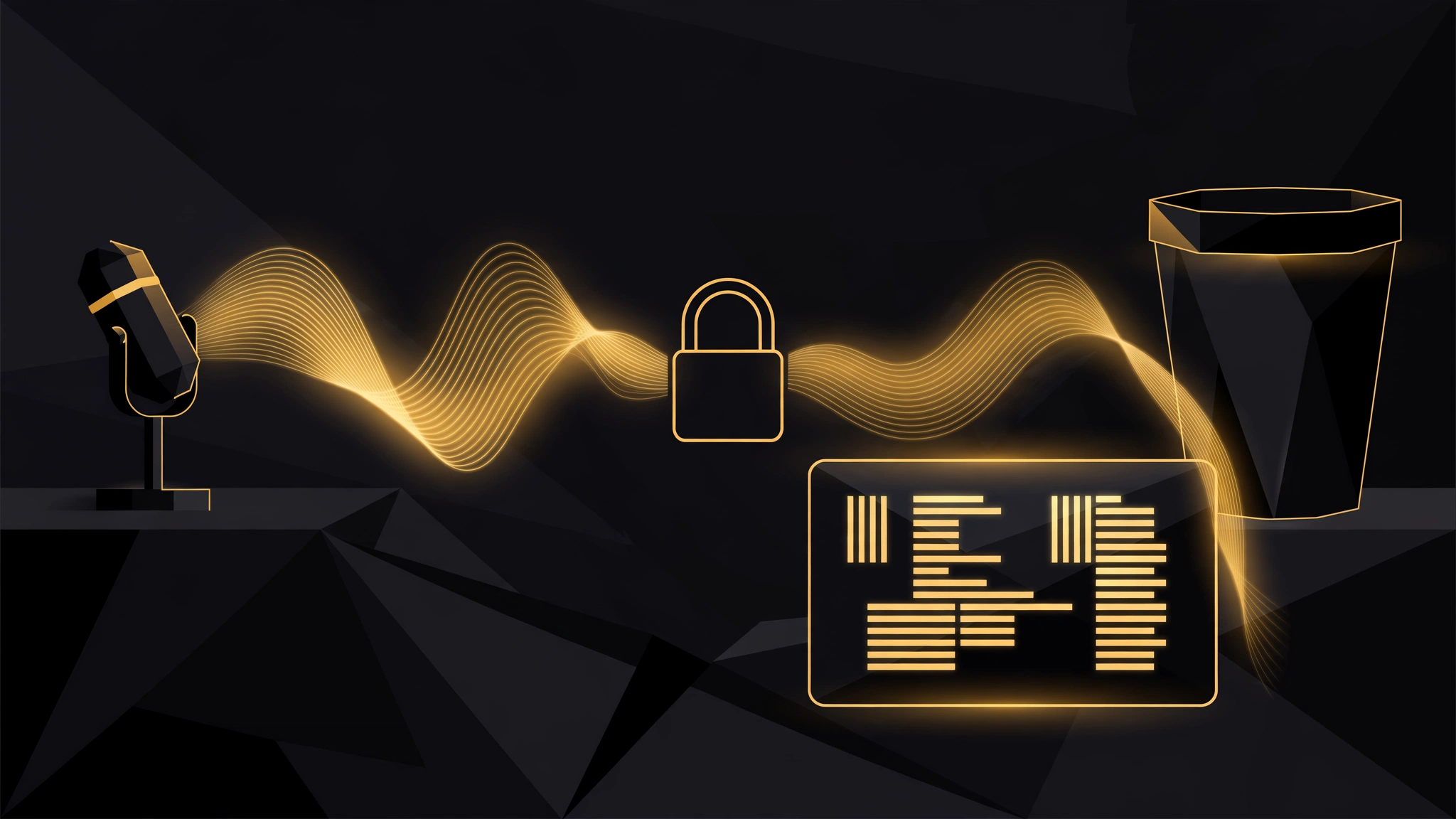
The documentation's "How voice mode works" section is plain about the mechanics. The app streams your microphone audio to Google's servers, where Gemini Live recognizes what you say and generates the spoken replies, and when the agent acts on a spoken request, that request includes the audio of what you said. In the App, the voice transcript is saved locally with the conversation and is removed when that conversation is deleted. Google's voice-mode documentation does not specify in this section how long server-side audio is retained. Google warns that the displayed transcript can mishear words, while Gemini Live processes the audio directly rather than depending on that transcript. A transcript error therefore does not necessarily mean the agent misunderstood the request. It also means the text record is not a guaranteed verbatim account of the audio the model processed. The audio itself is streamed to Google's servers.
Sources
- [1] Google, "Voice mode in Antigravity," official Antigravity blog, published 6 November 2026, read in full this run: the release and its availability in the App and CLI 1.5.0 and later; Gemini Live hearing voice directly and real-time spoken replies with interruption; task-giving, mid-task steering and stopping by voice; voice approvals ("allow it just this once," "allow it for this conversation") and the recommendation read-out; the destructive-action guardrail (deleting files, elevated-privilege commands, force-pushing to a Git remote cannot be approved by voice and require clicking Allow, while denial by voice remains possible); quiet-by-default behavior and "keep me posted" updates about every 30 seconds; nine voices and 0.75x to 2x speed; CLI /voice live and F6, /voice speaker, /voice speed and /voice duplex commands ("/voice duplex on lets you interrupt the agent by talking"); the SSH microphone option (agy mic-serve with ANTIGRAVITY_MIC); the scope rule that Gemini Live can reach only the conversation voice mode was started in, under the user's usual permissions; and the note that any task still running keeps going after you hang upRead source
- [2] Google, "Voice mode," Antigravity documentation, read in full this run: the wider voice grants ("allow it for this project," "always allow this"), the note that some risky actions can be allowed only once, and that "stop" or "cancel that" during a waiting prompt denies it; the "How voice mode works" section (microphone audio streamed to Google servers, request audio included when the agent works, transcript saved on the user's computer and deleted with the conversation, panel transcripts may mishear while the agent hears the voice directly); the Limitations list (App voice mode in local conversations only, not in Remote Control or cloud conversations; one conversation at a time; no subagent conversations or side questions; CLI unavailable in print mode and remote-agent sessions; Start button only when a message can be sent); the "End voice mode" note that any task the agent is still working on keeps running in the conversation after voice mode ends; and the troubleshooting notes that voice mode "might not be available for your account yet"Read source
- [3] Secondary coverage still landing on 7 November, for timing only: The World Insiders, "Google adds cloud-based agents and voice controls to Antigravity," published 7 November 2026, 06:18 UTC, and the Daily Fledgling morning edition of 7 November 2026, which lists Antigravity voice mode via Gemini Live among the day's items. No load-bearing claim in this article rests on either.